For decades, Latin America has been characterized by deep territorial disparities in income and productivity. Stark divides between leading metropolitan regions and lagging rural areas have shaped economic opportunity, social cohesion, and politics.
A recent World Bank study—Territorial Productivity Differences and Dynamics within Latin American Countries—provides fresh evidence on how these gaps have evolved over the past two decades, and what they mean for local development policy.
Drawing on household surveys and census data, the study tracks changes in labor incomes and location-specific productivity premiums across 14 countries in the region from the early 2000s through the late 2010s. The findings paint a nuanced picture: while territorial inequality has declined in most countries, large productivity gaps remain—especially between leading metropolitan areas and the rest of the country.
Convergence and Its Drivers
The study documents absolute convergence in labor incomes and place productivity at both state and municipal levels in most countries. In plain terms, poorer and more rural areas have, on average, caught up with richer, urban areas. This leveling up was driven by two parallel processes:
- Productivity gains in lagging areas, especially rural municipalities benefiting from the commodity boom of the 2000s. The “Golden Decade” of high global demand for agricultural and extractive goods brought new investments and jobs to peripheral regions.
- Slowdowns in leading metropolitan areas, where industrial decline and shifts toward low-productivity service jobs reduced growth momentum.
As a result, the territorial map of productivity looks less polarized than it did two decades ago. In many countries, rural and urban productivity premiums overlap considerably, challenging the conventional idea of a rigid rural-urban divide.
Persistent Inequality and the Role of Education
Despite these gains, large income gaps with metropolitan areas persist, especially in countries like Mexico, Brazil, Peru, and Honduras. The study shows that the most important factor behind these gaps is not necessarily geography itself, but differences in human capital. Educational attainment explains much of the disparity: households in leading metropolitan areas tend to be more educated, and therefore better positioned to secure higher incomes.
In some countries, however, differences in the ‘returns to endowments’—that is, the payoff to education, skills, or other household assets—also matter. In such cases, migration to metropolitan areas could still deliver significant income gains, especially for residents of poor, remote regions. This points to both opportunity and risk: while migration can raise household welfare, it can also drain human capital from lagging regions, exacerbating long-term territorial inequalities.
Policy Implications for Local Development
The findings from the analysis hold important lessons for policymakers, particularly those focused on decentralization and local development:
- Beyond the rural-urban dichotomy: Territorial policies should not assume a strict divide between “dynamic cities” and “stagnant rural areas.” Many rural municipalities have experienced rapid catch-up, while some major urban areas face stagnation. Local strategies must be tailored to the diverse realities of different places.
- Investing in human capital: The central role of education in explaining income gaps underscores the importance of equitable access to quality education. Local governments can help reduce territorial inequality by improving schools, vocational training, and skills development in lagging regions.
- Harnessing migration carefully: Migration to metropolitan areas offers income opportunities, but it can also deepen disparities if sending regions lose their skilled workers. Policies should aim to reduce barriers to mobility while supporting balanced regional development that gives people the choice to prosper locally.
- Strengthening local institutions and infrastructure: Place-based differences also reflect variations in governance, infrastructure, and public service delivery. Empowered and well-resourced local governments can help unlock productivity by improving local conditions for households and firms.
Looking Ahead
On the eve of the COVID-19 pandemic, Latin America’s territorial inequalities had narrowed but remained stubbornly high. The pandemic itself has likely reversed some of these gains, heightening the urgency of policies that foster resilient and inclusive local economies.
For the wider community of practice interested in decentralization and localization, the study is a reminder of the importance of subnational governance and fiscal systems in shaping territorial outcomes. Decentralization reforms—when designed to empower local governments with resources, responsibilities, and accountability—can play a decisive role in bridging gaps between regions. By investing in human capital, strengthening local institutions, and promoting balanced territorial development, countries in Latin America and beyond can move closer to realizing the promise of equitable, place-sensitive growth.
Access the full study here:
D’Aoust, O., Galdo, V., & Ianchovichina, E. (2023). Territorial Productivity Differences and Dynamics within Latin American Countries. World Bank Policy Research Working Paper 10480.
D’Aoust, O.S., Galdo, V. & Ianchovichina, E.I. Territorial income differences and dynamics within Latin American countries. Empir Econ (2025). https://doi.org/10.1007/s00181-025-02792-3
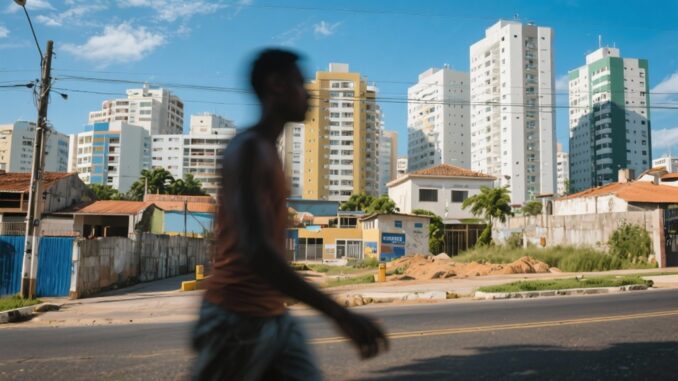
The Feature Image for this blog post is AI generated.