

Citizen Participation and Inclusive Governance Course
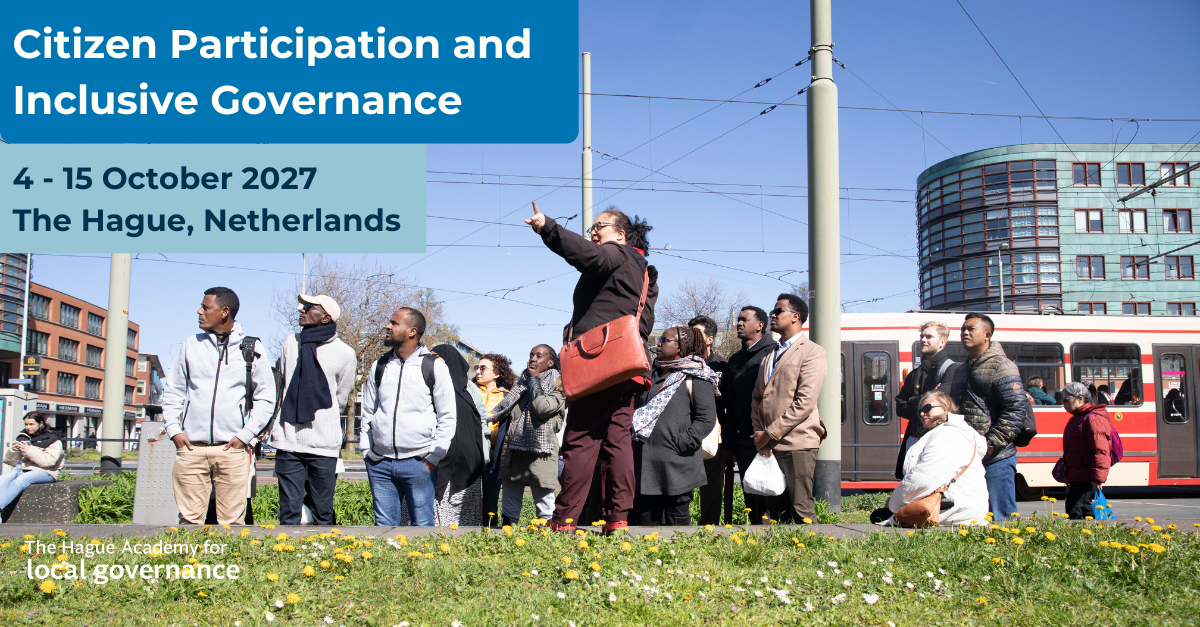
Sustainable development is driven by local governments that are responsive to the needs of their citizens and willing to involve them in their decision-making processes. To make this work, citizens need to feel empowered to make their voices heard and cooperate effectively with the authorities.
This course discusses basic principles of participation, inclusion, transparency, and social accountability and how to put them into practice. It shows concrete examples of innovative strategies, outreach approaches and communication tools. Participants discuss the basic conditions for successful participation and share lessons learned from experience, such as the importance of creating trust and managing expectations.
Special attention is given to ensuring all voices are heard, including women, youth and people with disabilities. Furthermore, we explore how information technologies can ensure greater accountability and transparency within government and facilitate meaningful participation.
The course discusses how to create conditions for successful participation, build trust, and manage expectations. Guided by practitioner experts, participants will learn from best practices, exchange experiences and work on:
- Effective communication strategies based on the participation ladder and innovative approaches, such as citizen assemblies
- Approaches to participatory urban planning and placemaking
- Methods to reach out to and involve underrepresented groups, including women, youth, and persons with a disability
- Applications of digital tools that increase transparency and help citizens hold governments accountable
We offer a 50% fee reduction for staff of local governments or local NGOs in countries on the OECD-DAC list.
Learn more and apply: https://thehagueacademy.com/course/citizen-participation-inclusive-governance/

