Decentralization has been a central pillar of governance reform across Africa for more than three decades. It has been pursued as a means to improve service delivery, to strengthen accountability, and to bring government closer to citizens. Yet today, the context for decentralization looks very different than it did in the 1990s and early 2000s. Fiscal constraints are tightening, democratic momentum has slowed in many countries, and central governments are reasserting control.
In this shifting landscape, it is worth asking: what has decentralization support actually achieved—and what can we learn from it? A recent evaluation by the German Institute for Development Evaluation (DEval), reviewing more than 30 years of German development cooperation in Sub-Saharan Africa, provides one of the most comprehensive answers to date.
A substantial but evolving engagement
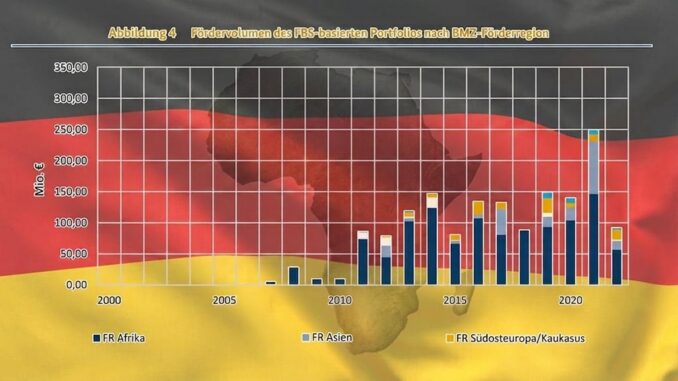
Germany has been a consistent and significant supporter of decentralization in Africa. Over the past two decades, its portfolio has included nearly 300 projects across a wide range of countries—from Ghana and Mozambique to Mali, Rwanda, and Senegal—focused on strengthening local governments, improving fiscal systems, and promoting participatory governance. For Sub-Saharan Africa, the FBS-based portfolio (i.e., projects explicitly coded as decentralization projects) amounted to 1.17 billion euros from 2007-2022 (the time span for which the FBS classification is consistently available).
This engagement has evolved over time. Early efforts emphasized administrative reform and subsidiarity, while later phases aligned more closely with poverty reduction, service delivery, and governance agendas. Despite these shifts, the core objective remained constant: to support capable, accountable, and service-oriented local governments.
Local successes, limited transformation
One of the evaluation’s clearest findings is that decentralization support often works—at least locally.
German-supported programs have contributed to tangible improvements in many contexts: better-resourced local governments, more engaged participatory planning processes, stronger local administrative systems, and incremental gains in service delivery. These are not trivial achievements. In many cases, they represent meaningful improvements in how local governments function.
One observation from the evaluation of German support to decentralization in Sub-Saharan Africa often the past two decades is that these gains have rarely translated into broader, system-wide change. This has meant that the improvements brought about by more effective local governance have tended to remain localized, uneven, and difficult to sustain. More ambitious outcomes such as stronger political decentralization or durable shifts in intergovernmental relations—which would have created a more sustainable and measurable impacts on national development—are far less evident.
This gap between local effectiveness of local governance or local development interventions and the lack of systemic impact on decentralization is a recurring theme—and a central challenge.
The political economy of decentralization
At the heart of this challenge lies a familiar constraint: decentralization is inherently political. While many African governments have formally committed to decentralization, their willingness to transfer real authority and resources to subnational levels is often much more limited. In practice, decentralization reforms have frequently stopped short of full devolution, resulting instead in partial decentralization. In some cases, decentralization processes have even stalled or reversed, with central governments reasserting control.
The evaluation underscores this tension. German support has generally been well aligned with formal reform frameworks, but these frameworks have not always reflected genuine political commitment. As a result, technical assistance has operated within constrained systems, limiting its ability to drive deeper institutional change.
A more fragmented support landscape
The evaluation also highlights how the international context has changed. In the late 1990s and early 2000s, decentralization reforms in Africa were often embedded in broader donor coordination frameworks, including budget support and governance reform agendas. These provided a platform for collective engagement and policy dialogue.
Today, that landscape has shifted significantly. While the localization of development efforts (or “localization of the SDGs”) has become a more common refrain, in practice, many development partners have reduced their focus on decentralization, and coordinated approaches have weakened. Germany remains one of the last major donor countries that is engaged in supporting decentralization and local government reforms at scale, but is doing so in a shrinking and increasing contested development environment.
For a reform area that depends heavily on political incentives and system-wide alignment, this fragmentation matters. It reduces the ability of external actors to support sustained reform and limits opportunities for shared learning.
Learning at the margins, not at the center
There is evidence that German development cooperation has adapted over time—particularly at the level of individual projects. Programs have often been tailored to country contexts, focusing pragmatically on what is feasible, such as strengthening local administrative systems or improving fiscal transfers.
But the evaluation suggests that thse adaptations have rarely translated into broader strategic shifts. The evaluation finds limited evidence of a systematic approach that differentiates between country contexts—for example, distinguishing between reform-oriented and reform-resistant environments. In other words, while projects have learned, the overall approach has remained relatively constant—even in vastly different contexts.
Implications for multilevel governance
The lessons from this evaluation are useful as the government—through the Federal Ministry for Economic Cooperation and Development, BMZ —continues to sharpen its efforts to promote good governance, improved public services, local development, and socio-economic progress in Sub-Saharan Africa. However, the lessons from the evaluation of Germany’s decentralization support portfolio in Africa extend beyond Germany.
First, the assessment reinforces that decentralization is not primarily a technical agenda. Capacity building and institutional strengthening are necessary, but they are not sufficient. Without political commitment at the center, their impact will remain limited.
Second, the evaluation highlights the importance of focusing on the “missing middle” of multilevel governance: while local-level interventions can generate meaningful improvements in local conditions, without corresponding changes in intergovernmental systems, these gains will not scale or endure.
Third, the assessors point to the need for more differentiated and strategic engagement by German development agencies. Not all contexts are equally conducive to decentralization, and approaches need to reflect this reality.
Finally, the evaluation raises a broader question about the global architecture supporting decentralization As multilateral dialogue formats have faded and donor engagement has become more bilateral, the field risks becoming increasingly fragmented, with fewer shared platforms for coordination and learning.
Looking ahead
Decentralization in Africa remains an unfinished and evolving process. In many countries, it continues to shape how states function and how services are delivered.
The DEval evaluation does not offer simple prescriptions. But it does offer a clear message: achieving meaningful progress in decentralization requires more than well-designed projects. It requires sustained engagement with the political and institutional realities of multilevel governance in Africa and elsewhere around the world—and a willingness to adapt strategies accordingly.
For those working to advance decentralization and localization, that may be the most important lesson of all.
Access the report “German Development Cooperation in Support of Decentralisation in Sub-Saharan Africa” on the website of the German Institute for Development Evaluation (DEval).
Executive Summary (in English)
Résumé (Executive Summary in French)
Full Report: “Unterstützung von Dezentralisierungsmaßnahmen in Subsahara-Afrika durch die deutsche Entwicklungszusammenarbeit” (available only in German) (PDF, 3.29 MB)
BMZ Management Response (in German)