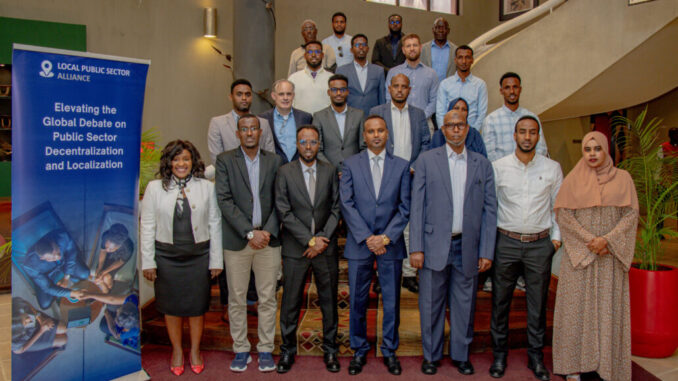
The Local Public Sector Alliance (LPSA), in partnership with the World Bank Somalia, implemented a sequence of two capacity-building programs in 2025 designed to equip Somali policymakers and practitioners with the skills, tools, and frameworks to strengthen intergovernmental relations and urban governance systems. Together, these initiatives represent a significant step toward building stronger institutions that can support Somalia’s ongoing decentralization and urban transformation agenda.
Laying the Foundations: Multilevel Governance and Intergovernmental Finance (May 2025)
Held from May 4–9, 2025, in Nairobi, the first training on Multilevel Governance and Intergovernmental Finance: Applications to Somalia, introduced participants to the principles, models, and comparative practices shaping decentralization and intergovernmental fiscal relations across Africa. It provided a conceptual and practical foundation for strengthening fiscal governance in Somalia’s complex multilevel context.
The workshop explored key themes including:
- Principles of Fiscal Decentralization: Understanding expenditure assignments, revenue mobilization, fiscal transfers, and subnational borrowing frameworks.
- Functional and Fiscal Responsibilities: Clarifying roles across the federal, state, and municipal levels to promote coherent service delivery.
- Intergovernmental Transfer Design: Structuring fair and performance-based grant systems suited to Somalia’s governance realities.
- Local Public Financial Management (PFM): Enhancing transparency and efficiency through robust local budgeting, accounting, and audit systems.
- Comparative African Experiences: Drawing insights from Kenya, Uganda, and South Africa to align decentralization with sustainable local services.
- Field Visit to Makueni County (Kenya): Demonstrating fiscal autonomy, participatory governance, and capital investment planning in practice.
The program was facilitated by Dr. Jamie Boex (LPSA/Duke University), Prof. Roy Kelly (Duke University), Prof. Tinashe Chigwata (University of the Western Cape), Prof. Nara Monkam (University of Pretoria), Dr. Henry Gichana (Katiba Institute/African School of Decentralization), Steve Ogutu (Movement for Community-Led Development), and Jacqueline Muthura (LPSA).
The discussions and outcomes from this program laid the groundwork for applying multilevel governance more directly to Somalia’s rapidly urbanizing environment—leading to the design of the follow-up program in October 2025.

Applying the Principles: Strengthening Urban Institutions and Urban Finance (October 2025)
Working with organizations such as the World Bank, Somali city administrations have increasingly implemented externally funded infrastructure projects. Yet the challenge remains that most city governments lack the institutional frameworks, processes, and fiscal capabilities to manage infrastructure and deliver services effectively.
For Somalia’s cities to evolve into sustainable engines of development, they must operate as decentralized institutional and financial entities equipped with core urban management systems for planning, budgeting, procurement, service delivery, and performance monitoring.
In this context, citizen-centered and results-oriented city management requires exercising six core capabilities defined under the LPSA PROMOTE Framework (Promoting Results-Oriented Management for Local Transformation and Efficiency):

- The capability to consult and coordinate
- The capability to vision and plan
- The capability to decide and commit
- The capability to act and administer
- The capability to monitor and report
- The capability to assess and adapt
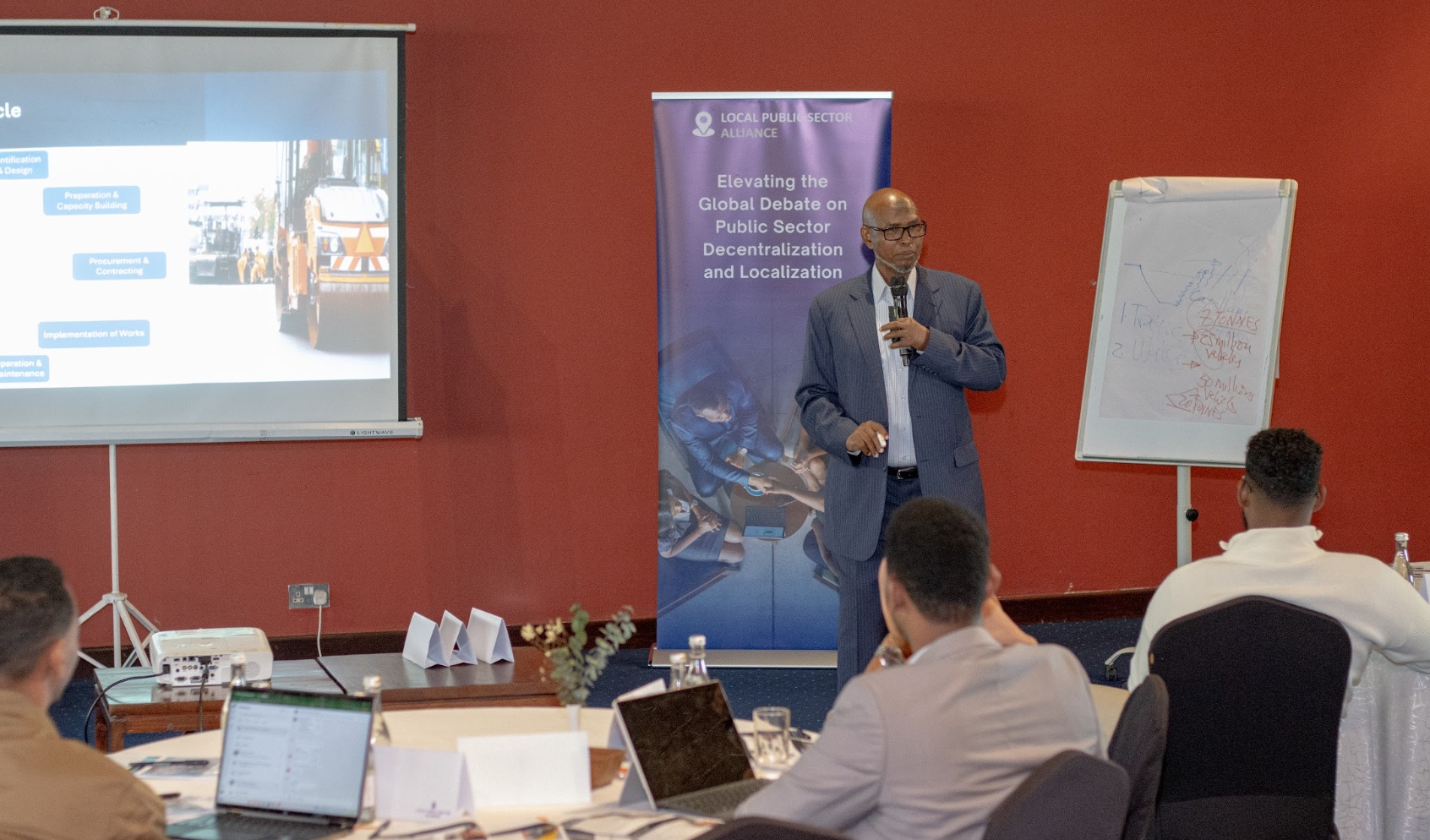
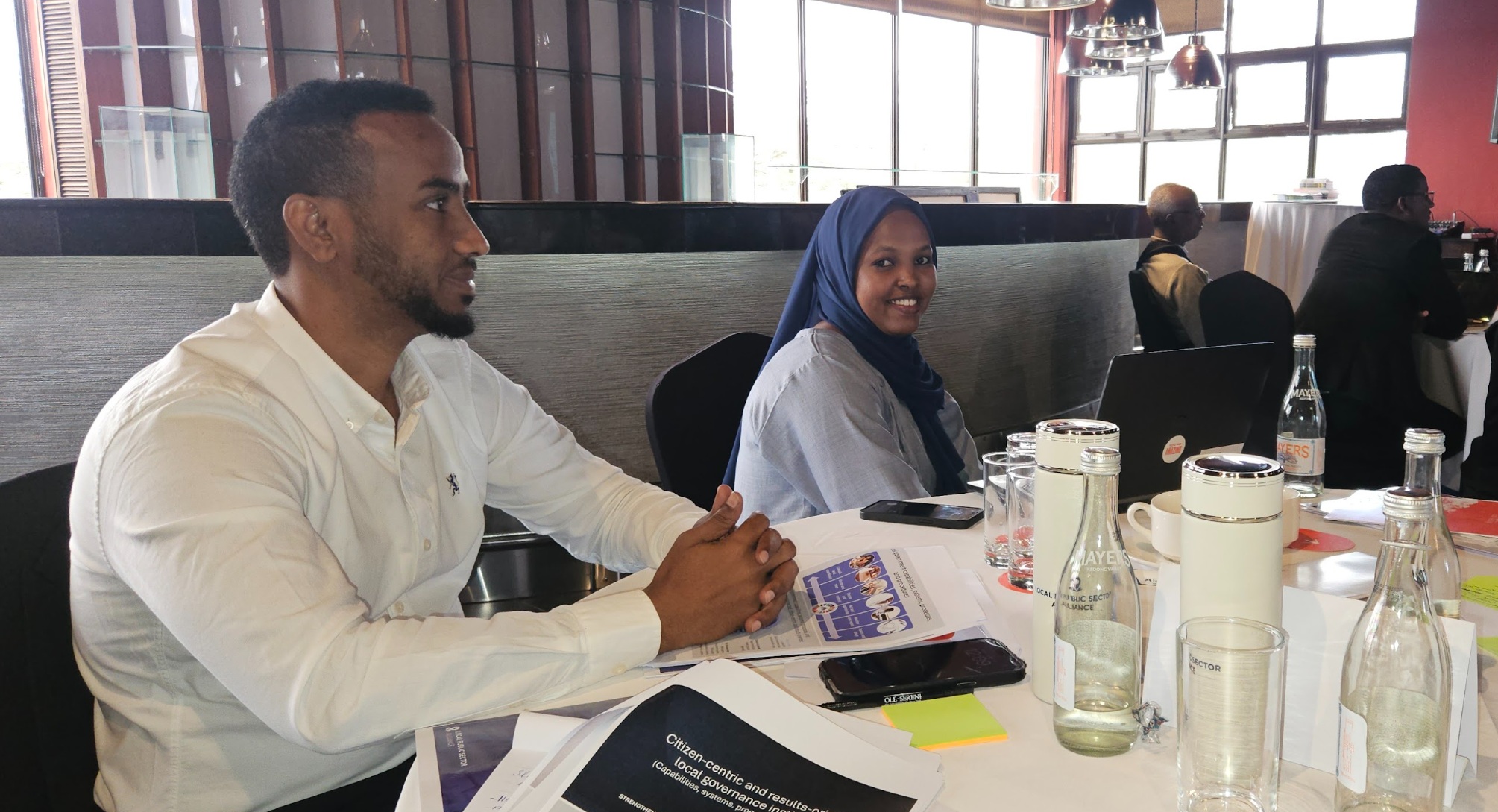
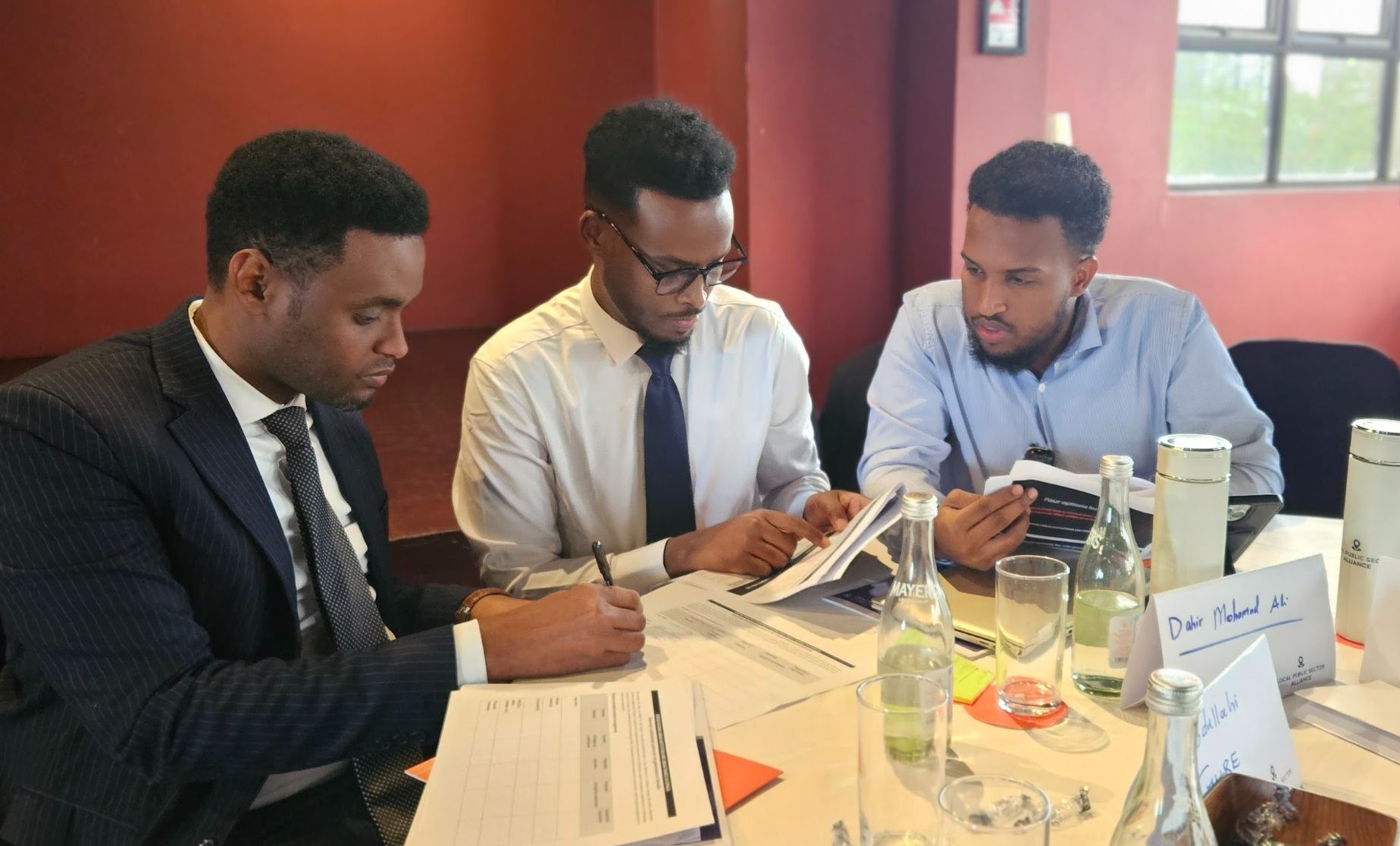
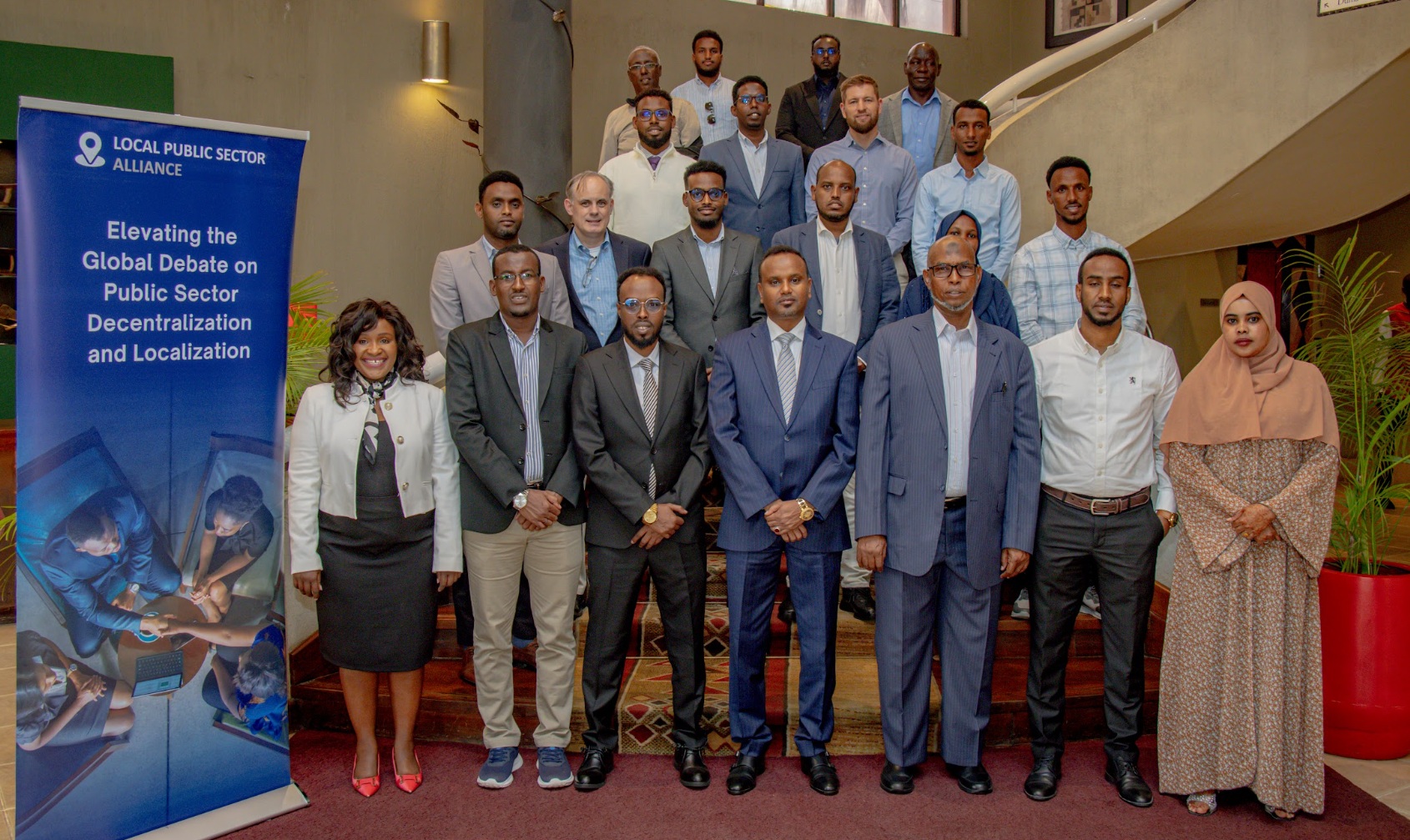
Building on these principles, the Program on Strengthening Urban Institutions and Urban Finance in Somalia, held from October 19–22, 2025, applied the concepts of multilevel governance to the city level. The sessions provided participants with practical tools to strengthen operational, fiscal, and managerial performance in Somali cities.
Key sessions included:
- Defining the Role of City Governments: Understanding city governance as a pillar of multilevel systems.
- Strategic Urban Planning: Facilitated by Patrick Adolwa, focusing on inclusive planning and resilient development.
- Budgeting and Capital Investment Planning: Led by Dr. Jamie Boex and Patrick Adolwa, aligning fiscal priorities with community needs.
- Infrastructure Maintenance Planning: Delivered by Eng. Abdulrashid Sheikh Mohamed, emphasizing asset lifecycle management.
- Revenue Enhancement and Own-Source Financing: Presented by Lennart Fleck, introducing the Rapid Own Source Revenue Analysis (ROSRA) approach.
- Practitioners Roundtable: Moderated by Jacqueline Muthura (LPSA) and featuring lessons from Ms. Lilian Kieni (Kenya’s State Department for Housing and Urban Development), Mr. Gitau Thabanja (City Manager, Nakuru), and Mr. Alex Mutemi (Municipal Manager, Mwingi).
Through interactive exercises, comparative case discussions, and Back-Home Action Planning, participants developed context-specific strategies for city governance reform and sustainable fiscal management.
Catalyzing Learning and Governance Transformation
Both training programs illustrate how LPSA bridges global theory and local practice to foster resilient multi-level governance systems. By aligning technical learning with peer exchange and continuous follow-up, LPSA is helping move Africa’s decentralization agenda by elevating the debate on efficient decentralization and localization while catalyzing action.
These programs were implemented by LPS Associates and the Local Public Sector Alliance (LPSA) with funding support from the World Bank Somalia.