
The future of decentralization and multilevel governance in a rapidly changing context
New York City, February 26-27, 2026

Registered participants
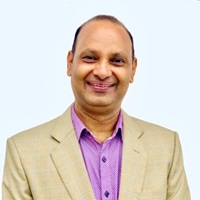
Bishnu Adhikari
The Asia Foundation, Nepal Office
Bishnu Adhikari is governance director for The Asia Foundation in Nepal, with over 20 years of experience in the field of local governance, federalism and civil society as an adviser, and university lecturer.
Since 2018, Bishnu has been leading TAF’s Subnational Governance Program that works to create enabling conditions for effective and accountable local governments in Nepal. Prior to this, Bishnu was deputy team leader of the Economic Policy Incubator, a research and public policy project of DFID Nepal to support sub-national economic growth. From 2013-16, Bishnu was Governance Adviser to DFID Nepal following from his role as the Strategy and Governance Adviser to DFID/Nepal’s civil society program Enabling State Program (2011 to 2013). Bishnu served for a decade (2000-2010) with USAID/Nepal advising on Democracy and Governance issues. From 1996-2000 Bishnu led high profile research projects on political developments, refugees and decentralization in Nepal as a lecturer of political science at the Center for Nepal and Asian Studies at Tribhuvan University.
Bishnu holds a master’s degree in Political Science from Tribhuvan University, and was a Democracy, Development and Rule of Law Fellow at Stanford University.

Titilola Akindeinde
Local Government Revenue Initiative (LoGRI)
Dr. Titilola Akindeinde is the Executive Director of Local Government Revenue Initiative (LoGRI) at the Munk School of Global Affairs & Public Policy (University of Toronto). She has over 20 years of experience in Economic Policy and Strategy in the UK and Nigeria. She has a proven track record as a UK government economist, a consultant providing technical support to the Government of Nigeria, and as Team Leader/Programme Manager implementing FCDO funded Policy Development Facility (PDF) programmes, where she demonstrated success in leadership, programme management, strategic thinking and engagement, analytical decision making, economic analysis, and policy and strategy development. She has led teams and consultants in economic and governmental interventions and communicated the results effectively to various stakeholders and audiences. Dr. Akindeinde has a highly developed political awareness, understanding of economic policies and growth, and wide-reaching networks through her experience working at a high level within government. This awareness underscores her ability to use political judgement and sensitivity in managing relationships with senior government and private sector actors as evidenced in her leadership of PDF.
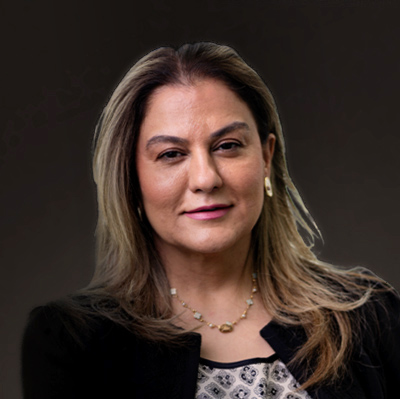
Shahla al Kli
Counterpart International
Shahla Al Kli is Counterpart International’s Country Representative-Iraq and the organization’s former Chief of Party for the USG-funded Iraq Civil Society Activity, a program that focuses on strengthening citizen engagement and participation in the public sphere, especially among women and youth. Al Kli is also a non-resident scholar at the Middle East Institute. Prior to that, she served as Research Analysis and Knowledge Mobilization Director at Proximity International, the Middle East Deputy Regional Director at Mercy Corps, a Principal Development Specialist at DAI Global, an advisor to the Speaker of the Iraqi Parliament, a senior advisor to the Speaker of the Kurdistan Parliament, a former Country Director for Counterpart’s Iraq programs, and an auditor at the Central Bank of Iraq. She is a long-term development practitioner in the Middle East with expertise in politics, governance, security, state building, and fragile states. Her doctoral dissertation about governance and decentralization in Iraq at the Fletcher School of Law and Diplomacy at Tufts University was awarded the Peter Ackerman Award for outstanding scholarly work.
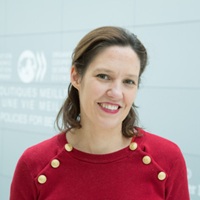
Dorothée Allain-Dupré
OECD Centre for Entrepreneurship, SMEs, Regions and Cities
Dorothée Allain-Dupré is Head of the Regional Development and Multi-level Governance Division in the OECD Centre for Entrepreneurship, SMEs, Regions and Cities (CFE). She manages a team of 40+ experts providing governments with data, evidence, analysis and policy advice in a wide range of areas ranging from regional and rural development and attractiveness, multi-level governance, public investment, and subnational finance. She oversees the OECD Regional Development Policy Committee. Dorothée holds a Master’s degree in European Studies from the University of Sussex (UK), a Master of Public Policy from the Ecole Doctorale of Sciences-Po, and she graduated from the Institute of Political Sciences (Sciences-Po) Paris.

Sohaib Athar
World Bank
Sohaib is a Senior Urban Development Specialist in the Urban, Subnational Finance, Tourism and Disaster Management Department of the World Bank Group. He has 15 years of multilateral (World Bank) and think tank experience in topics such as municipal finance, decentralization and local governance, urban infrastructure finance, local economic development, and results-based financing. He has led and contributed to World Bank financing projects, advisory activities, and knowledge products on these topics in several regions including Eastern and Southern Africa, Europe & Central Asia, Middle East & North Africa, and South Asia. He also leads the municipal finance and governance community of practice at the World Bank. Previously, he worked as an economist at the International Growth Centre, where he managed a portfolio of policy advisory and research activities to support central and subnational governments in Pakistan. Sohaib has a master’s degree in public policy from the Kennedy School of Government at Harvard University, where he was a Fulbright Scholar, and a Bachelor of Science (Honors) in accounting and finance from the Lahore University of Management Sciences in Pakistan.

Alexander Bastianen
University of Lausanne
Alexander Bastianen (PhD) is a researcher specialized in local government studies and comparative public administration, based in Lausanne, Switzerland. He obtained his PhD from the Swiss Graduate School of Public Administration (IDHEAP) of the University of Lausanne. He has led the Local Autonomy Index 2.0 project, developing an updated and extended version of the acclaimed indicator of decentralization at the local level, currently covering 57 countries from 1990-2020. He was also in charge of the most recent Swiss Municipal Monitoring survey (2023). His research has been widely published in the form of successful peer-reviewed journal articles and edited books, including the recent volume “Dynamics and Issues of Local Autonomy – A Comparative Study”. This research has served as a basis for a variety of reports and policy recommendations, notably by organizations such the European Commission and the OECD.

Dubravko Bilić
Mayor of Ludbreg, Croatia and NALAS President
Mayor Dubravko Bilić was born on September 3, 1969 in Banja Luka, Bosnia and Herzegovina. He lives in Ludbreg and is the father of two children. He graduated from the Faculty of Humanities and Social Sciences in Zagreb and obtained the title of professor of Croatian language and literature. Along the way, he also graduated in librarianship, and for some time he attended the study of philosophy and linguistics in addition to this study. He also enrolled in doctoral studies at the Faculty of Humanities and Social Sciences, but he did not finish it because he put his family first, so when time allows, he will return to it. His great hobbies are hiking and cycling.
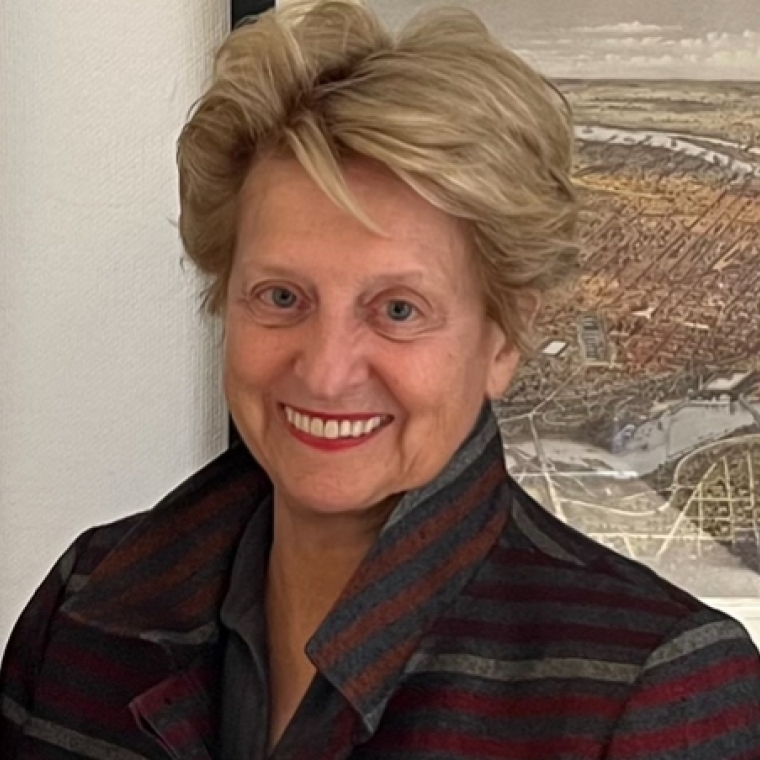
Eugenie Birch
University of Pennsylvania, Philadelphia, Penn.
Eugenie L Birch, FAICP, is the Lawrence C. Nussdorf Professor of Urban Research, co-Director, Penn Institute for Urban Research and co-Editor, Penn Press’s City in the 21st Century series at the University of Pennsylvania. Her latest publications include Urban Sustainable Development, Governance, Finance, and Politics, Rio de Janeiro: Brazilian Center for International Relations (CEBRI), 2024 (edited with Pedro Vormitagg and Mariana Albuquerque) and Harnessing Urban Innovation to Unlock the Sustainable Development Goals, Singapore: Springer 2024 (edited with Ali Cheshmehzangi, Nicholas You and Jose Siri). She is co-chair, Secretariat, SDSN Global Commission on Urban SDG Finance. She holds a master and PHD degree in Urban Planning, Columbia University.

Jamie Boex
Local Public Sector Alliance
Dr. Jamie Boex is the Executive Director of the Local Public Sector Alliance. Jamie is a public finance economist with extensive experience in fiscal decentralization, multilevel governance and public sector finance reforms in developing and transition countries around the world. As a scholar-practitioner, Jamie has worked with numerous governments and global development organizations, including the World Bank, UNDP, and various bilateral development agencies. Over the past 25 year, Jamie has actively contributed to policy reforms in over twenty-five developing and transition countries around the world.
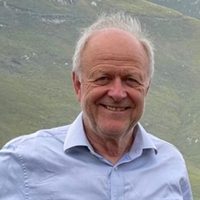
Andrew Boraine
Founder, South African Centre for Cities
Prof. Andrew Boraine is an independent partnering and relational governance practitioner. He has been involved in South Africa’s political, local government, urban, economic, and sustainability change processes for the past four decades as a student leader, anti-apartheid activist, negotiator, government planner, city manager, chief executive, partnering specialist, place-maker, institutional designer, and leadership coach.
In 1995, Andrew was appointed DDG in the Department of Constitutional Development. In this capacity, he assisted with the drafting of the local government and cooperative governance chapters in the 1996 South African constitution and convened the White Paper on Local Government process in 1997. Thereafter, Andrew was appointed City Manager of the City of Cape Town and served in this role until 2001. In 2002, he was appointed Special Advisor to the Minister of Provincial and Local Government, where he conceptualized and convened the South African Cities Network (SACN). Andrew is currently part of the team that is reviewing the White Paper on Local Government in South Africa.
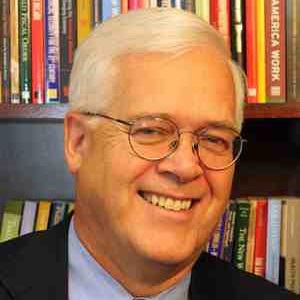
Chas Cadwell
Local Public Sector Alliance
Charles ‘Chas’ Cadwell is an Institute fellow in Housing and Communities Division at the Urban Institute. From 2007 to 2019, he led Urban’s Center on International Development and Governance. An international development expert and lawyer with 30 years’ experience in economic reform, research oversight, and nonprofit leadership, Cadwell’s work focuses on governance reform, aid effectiveness, and the production and application of policy research to real-world development problems. At Urban, this focus has been applied to local government effectiveness and inclusiveness. Current projects address reform of intergovernmental fiscal and administrative systems in Moldova and Kenya. He has worked recently on smart cities in Asia, analysis of constitution implementation in Nepal, and health reform in Ukraine. Cadwell is also a founding board member of the Local Public Sector Alliance (a global community of practice) and the Center for Values in International Development (ethics in development). Earlier, Cadwell worked in the White House Office of Consumer Affairs, in the Office of Advocacy at the US Small Business Administration, in private law practice, and in the export information business. From 1990 to 2006, Cadwell was director of the IRIS Center in the Department of Economics at the University of Maryland. Cadwell is a graduate of Yale College and the National Law Center at the George Washington University. He has been an adjunct professor at the Elliott School of International Affairs at George Washington University.
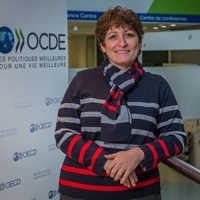
Isabelle Chatry
OECD
Isabelle heads the Decentralisation, Subnational Finance and Infrastructure Unit at the OECD Centre for Entrepreneurship, SMEs, Regions and Cities. Her work focuses on multi-level governance, decentralisation and territorial reforms, regional and local public finance, subnational climate finance, and infrastructure investment. She supervises the OECD-UCLG World Observatory on Subnational Government Finance and Investment (WOFI) and has co-authored numerous OECD thematic and country reviews that support national and subnational governments in designing and implementing governance and financing reforms. Prior to joining the OECD, Isabelle worked in the research departments of Dexia Credit Local and Caisse des Dépôts et Consignations, as well as as an independent consultant, bringing experience at the intersection of public finance, territorial development, and policy analysis. She is a graduate of the École Normale Supérieure (ENS) and holds an Agrégation in geography.
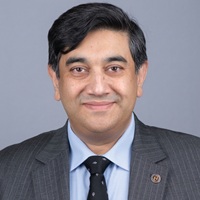
Rupak Chattopadhyay
Forum of Federations
Rupak has been President and CEO of the Forum of Federations since 2011. He was a Senior Adviser to the Ethiopian House of Federations on federalism. He was Member of the Consultative Group on the Study of Intergovernmental Relations and Dispute Resolution Mechanisms, Government of India. In 2004/5 he was Advisor to the Chairman of the Observer Research Foundation. He is a Senior Research Fellow at the Centre for Federal Studies at the University of Kent. Over the last two decades he has contributed as an expert in support of policy and constitutional reforms in Brazil, Ethiopia, Mexico, Myanmar, Philippines, Nepal, Sri Lanka, Tunisia, and Yemen.
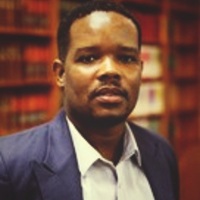
Tinashe Chigwata 
Dullah Omar Institute, University of the Western Cape, South Africa
Tinashe Carlton Chigwata is an Associate Professor and the Deputy Director of the Dullah Omar Institute (DOI) based at the University of the Western Cape (UWC), South Africa. He holds a PhD in Public Law from UWC and undertakes research, teaching, and consultancy on local and regional governments, multi-level government and other governance-related matters. He has authored and edited several academic publications, including four books on local government in South Africa, Zimbabwe and Zambia. Prof Chigwata has overseen several research projects on local government, citizen participation, transparency, accountability, procurement etc. He is also the Chief Editor of the Local Government Bulletin.

John Coonrod
Movement for Community Led Development
Founder and US Chair, Movement for Community Led Development (MCLD). 50 years experience in community development in 40 countries.

Max Coral
UK Foreign Commonwealth and Development Office (FCDO)
Head of Cities and Urban Development Policy, Green Cities and Infrastructure Team, Energy and Climate Directorate, FCDO.

Mirna Dave
Local Public Sector Alliance
Mirna is the Director of Communications and Operations for the Local Public Sector Alliance, where she supports global knowledge sharing and collaboration across the network, including communications platforms, member engagement, and expert working groups.
Mirna also serves as a Senior Program Coordinator at Duke University’s Sanford School of Public Policy, where she manages open-enrollment and custom executive education programs for mid-career professionals from around the world. She brings more than eight years of experience in program management, operations, and stakeholder support.
Mirna holds a BS in Biological Sciences and a BA in International Studies with a concentration in East and Southeast Asia from North Carolina State University.

Jaap de Visser
Dullah Omar Institute, University of the Western Cape, South Africa
Professor Jaap de Visser has been involved with the Dullah Omar Institute in Cape Town, South Africa, since 1998, including serving as the Institute’s director from 2013 to 2022. He is a Professor of Law at the University of the Western Cape’s Faculty of Law and the South African National Research Foundation’s National Chair in Multilevel Government. His research, teaching and consulting focuses on multilevel government, local government, good governance and federalism in the so-called Global South, and he has published widely on these topics.
He believes that decentralisation, provided it is implemented genuinely and adequately, holds great promise for pursuing development, for building democracy and peace, and for managing ethnic, cultural, linguistic and religious diversity. He co-curator of Local Government Law of South Africa, a textbook on the legal framework for local government. He is also co-editor of the Local Government Bulletin, a quarterly newsletter on local government in South Africa. Prof De Visser is co-convenor of a Masters Multilevel Government, a Postgraduate Diploma on local government and the annual African School on Decentralisation.
Prof De Visser has consulted for many national and international organisations, including the World Bank, UNHABITAT, USAID, Forum of Federations, GIZ, South Africa’s Department of Cooperative Government, the City of Cape Town, the Western Cape government, and many local authorities in South Africa. He is rated by South Africa’s National Research Foundation as a B-2 scholar with “considerable international recognition for the high quality and impact of his/her recent research outputs”. He has written/edited eight books, produced 21 journal articles, 28 chapters in books, supervised ten doctorates and 27 masters theses. His work has been cited by courts in South Africa and abroad, including six Constitutional Court judgments. Prof De Visser is Vice-President of the International Association of Centers for Federal Studies (IACFS). In 2025, he was selected as one of the Top 25 Thinkers in Local Government by the LGIU (Local Government Information Unit, UK). He is also Co-Chair of the Local Public Service Alliance Expert Group on Sub-Saharan Africa.
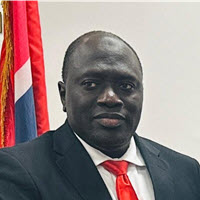
Ambassador Lamin B. Dibba
Permanent Representative of the Gambia to the United Nations
Ambassador Lamin B. Dibba serves as the Permanent Representative of the Gambia to the United Nations. Prior to his appointment, Mr. Dibba served as the Gambia’s Minister of Environment, Climate Change and Natural Resources from 2017 to 2022. He also held positions in several non-governmental organizations, as the National Adviser to SOS Children’s Villages (Gambia) from 2013 to 2017, the Executive Director of the Gambia Women’s Finance Association from 2012 to 2013 and the National Coordinator for Action For Children from 2011 to 2012. From 2006 to 2011, he was the Executive Director of the Gambia’s Non-Governmental Organization Affairs Agency, also serving as its acting Executive Director from 2004 to 2006 and as a Programme Officer within the Agency from 2002 to 2003. Mr. Dibba holds a Master of Science in urban and regional studies from the University of Birmingham in the United Kingdom and a Bachelor of Arts in geography from Saint Mary’s University in Canada.

Lewis Dijkstra
Joint Research Centre, European Commission
Lewis Dijkstra leads a team doing Urban and Rural Analysis at the Joint Research Centre of the European Commission. He is a Visiting Professor in practice at the London School of Economics and Political Science. His work focusses on urbanisation, demography, decentralisation and Euroscepticism. He holds a PhD in Urban and Regional Planning from Rutgers University.

Lennart Fleck
UN Habitat
Lennart works in the Planning Finance and Economy Section of the United Nations Human Settlements Programme as a Programme Management Officer and agency lead on Local Finance. He is based at the UN-Habitat headquarters in Nairobi, Kenya. Lennart has provided technical assistance on Local Finance issues to local governments in over 20 developing countries and has developed the Rapid Own Source Revenue Analysis (ROSRA) approach as well as the Local Finance Framework. Lennart holds a Masters in Public Financial Management from SOAS and an MSc with Distinction in Development Management from the London School of Economics and Political Science.

Daniel Friedman
Center on International Cooperation, NYU
Daniel Friedman is the Program Director of Halving Global Violence at New York University’s Center on International Cooperation (CIC) on the Pathfinders for Peaceful, Just and Inclusive Societies team. Previously, he worked on a range of violence prevention and international development efforts with the US government. This experience included nearly a decade with the Department of State’s Bureau for Conflict and Stabilization Operations, where he helped manage US government efforts to promote peace, prevent conflict, and reduce violence in more than a dozen countries. Most recently, he served as Managing Director for External and Government Affairs at the Inter-American Foundation, an independent US government agency that advances grassroots development in Latin America and the Caribbean. He also served as a Foreign Policy Fellow in the US Senate, covering a range of policy issues related to peacebuilding and conflict prevention, and as a detailee to the United Nations (UN) at the International Labour Organization (ILO). He has also worked for several non-governmental and educational organizations in the United States and Latin America. He received a Bachelor of Arts degree in political science from the University of Michigan and a Master of Arts degree from the Fletcher School of Law and Diplomacy at Tufts University.

Claire Frost
Commonwealth Local Government Forum (CLGF)
Ms. Claire Frost is Head of Programmes at the Commonwealth Local Government Forum (CLGF). She has 20 years of experience working with local government at the local, national and international level. Claire is based at CLGF Headquarters in London (UK) and works extensively with CLGF’s regional teams in Africa, Asia, the Caribbean and the Pacific. She coordinates CLGF’s portfolio of projects and has extensive experience in inter-governmental relations, local economic development, climate resilience, sustainable urbanization, localizing the SDGs, social inclusion and addressing inequalities. She supports the coordination of the Commonwealth Women in Local Government Network (ComWLG) and the Commonwealth Sustainable Cities Network (CSCN). She is CLGF’s operational lead on the relationship with the European Union both in the coordination and implementation of the CLGF Framework Partnership Agreement (FPA) and as the representative to the Policy Forum for Development (PFD) and PLATFORMA. She has a Masters degree in urban planning and a BA in communications.
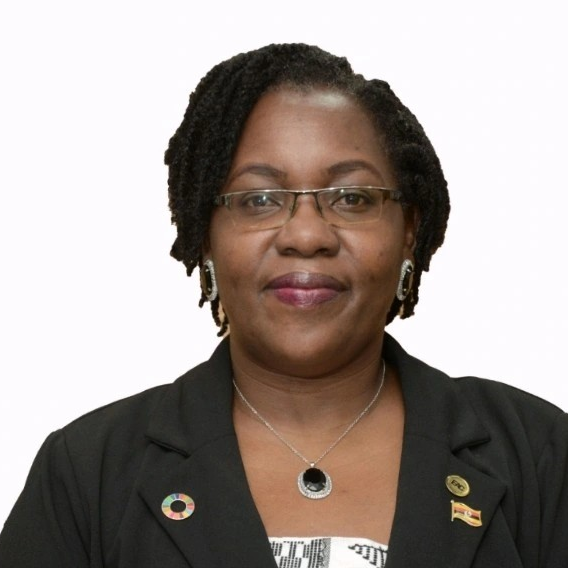
Gertrude Rose Gamwera Buyinga
East African County and Local Governments Association
Ms. Gertrude Rose Gamwera Buyinga, a qualified professional Lawyer and Chief Executive, is the Secretary General for East African County and Local Governments Association (EACLGA), whose headquarters are in based in Arusha City in the United Republic of Tanzania. Ms. Gamwera Buyinga has over Twenty-Five (25) Year’s working experience in Local Governance and the Public Sector Management space, and her experiences embody her unique strength in navigating and establishing strong Local, National, Regional and Global partnerships for Local Development. Ms. Gamwera Buyinga is also the Coordinator for the Commonwealth Local Government Forum Office for East Africa and has served as Head of Hub for the Strong Cities Network Eastern and Southern Africa Region, both also hosted by EACLGA. She is a member of the Policy Forum for Development, as a representative from the Africa Region, an active member of the Local Public Sector Alliance, Sub Saharan Region, and serves on the Regional Executive Committee for ICLEI Africa where she is an Advisor to the Board. Ms Gamwera is actively engaged in supporting Local Governments to strategically position themselves for the SDGs Localization Agenda, the Urban and Resilient Cities Agenda, as well as advocating for stronger linkages between the Subnational Local and County Governments with the East African Community Regional Bloc, to ensure that there is an effective decentralized driven EAC Regional Integration agenda. As active Local Government advocate, Ms. Gamwera Buyinga has been profiled as Speaker and representative in various Global for a including the UN General Assembly, the African Union, as well as annual convening of Assemblies of Networks like United Cities and Local Government Global, ICLEI, and the Strong Cities Network.

Samuel Garoni
World Bank
Samuel joined the World Bank in 2019. His work is focused on Public Sector Reform efforts with a specific focus on Local Public Service Delivery, Multilevel-Governance and Decentralization reforms as well as broader Public Administration Reforms. He also supports the World Bank’s efforts to strengthen Bank facilitated coalition building and human centered reform designs in operations. He co-Manages the Governance and Institutions Umbrella Program and supports the unit’s operational work. Prior to joining the World Bank Samuel held several positions in the international development field with an NGO and UN agencies in Cambodia, Bosnia-Herzegovina, and Mexico.
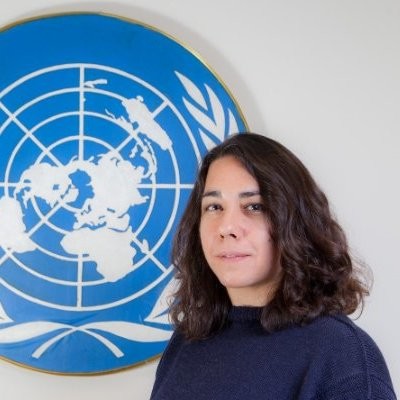
Amy Gill
UNDP
Amy Gill is the Global Lead, Local Action for UNDP with over 20 years’ experience in policy development and the design and management of local governance, peacebuilding and recovery programmes. She has focused on service delivery, decentralization, federalism and strengthening state-society relation. In particular, Amy has provided policy and programming advice to strengthen local governmental institutions, non-governmental organisations, and civil society in fragile and crisis settings.
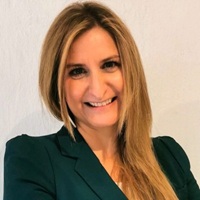
Orria Goñi
UNDP
Orria Goñi Delzangles leads UNDP’s global Public Finance work, advancing the alignment of fiscal systems with the SDGs. She supports governments in strengthening domestic resource mobilization, enhancing fiscal policy coherence, and improving public financial management — including at the subnational level through Local Integrated National Financing Frameworks and fiscal decentralization. With more than 25 years of experience across Africa, Asia, and Latin America, she has built partnerships between national and local governments, tax administrations, and international partners to embed sustainability and equity into public finance reforms. Previously, as Chief of Public Finance and Local Governance at UNICEF, she led policy dialogue on subnational finance and the protection of social sector investments amid tightening fiscal space. A lawyer by training, Orria brings expertise in economic governance, strategic planning and financing, and fiscal decentralization, with a strong commitment to horizontal knowledge exchange and South–South cooperation. She is fluent in English, French, and Spanish.
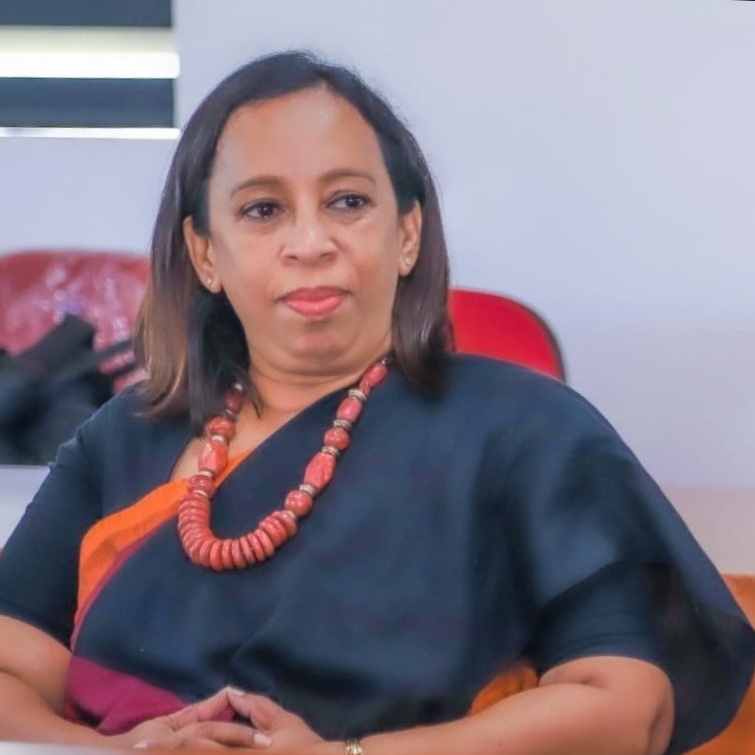
Hemanthi Goonasekera
Federation of Sri Lankan Local Government Authorities
Hemanthi is the Chief Executive Officer of the Federation of Sri Lankan Local Govt. Authorities, the national association for Local Govt in Sri Lanka. She has worked as a development practitioner for more than 20 years. Hemanthi is a life member of Sri Lanka Association for Advancement of Science and holds Masters Degree in Development Studies and Public Policy from University of Colombo, Sri Lanka.

Mathias Gritzka
Deutsche Gesellschaft für Internationale Zusammenarbeit (GIZ)
Planning Officer for local governance, decentralisation and public participation with long experience of working in governance programs mainly in Africa.

Astrid Haas
urbanAsti
Astrid is an independent feminist urban economist, based in Hong Kong, working across research and practice, supporting cities with questions of strategy and governance related to financing and funding public infrastructure and services. Astrid currently has appointments as the Chair of the Board of the Mawazo Institute, as a Research Associate at the African Centre for Cities at the University of Cape Town and ODI as well as a Fellow at the African Urban Lab, African School of Economics. She is currently pursuing her PhD at the University of Oxford looking at the intersection of infrastructure finance and gender. For more information, please see: www.urbanasti.com
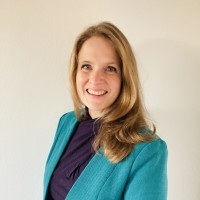
Julia Iversen
Deutsche Gesellschaft für Internationale Zusammenarbeit (GIZ)
Julia Iversen is a political scientist from Germany. For more than 18 years, she is now working with the German Development Cooperation GIZ, her main fields of work being democratization, decentralization and regional development. After starting her career in the Latin America Department in Eschborn, she took over the responsibility for the Good Governance Portfolio in Bolivia and was responsible for the portfolio-management of GIZ Laos. Coming back to Germany she took over the regional directorate of GIZ’s Northern German Office in Hamburg and led a program to foster decentralized development cooperation. Julia is now heading GIZ’s Competence Center “Democracy, Digital Governance, Decentralization and Urban Development”.
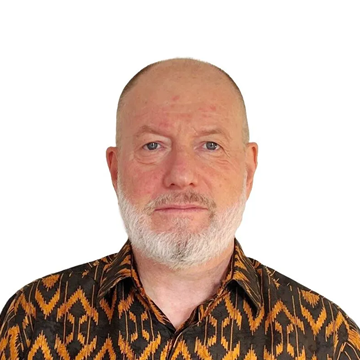
David Jackson
Center on International Cooperation, NYU
David Jackson is a Non-Resident Fellow at New York University’s Center on International Cooperation (CIC). He is recognized as a thought leader in local government finance with over 30 years of experience as an economist and urbanist. From 2013 to 2024, he directed UNCDF’s Local Development Finance Practice at a global level, initiating the Malaga Coalition for municipal finance, the International Municipal Investment Fund (now managed by Meridiam), and innovating city guarantee facilities and local capital market reforms for local government bonds.
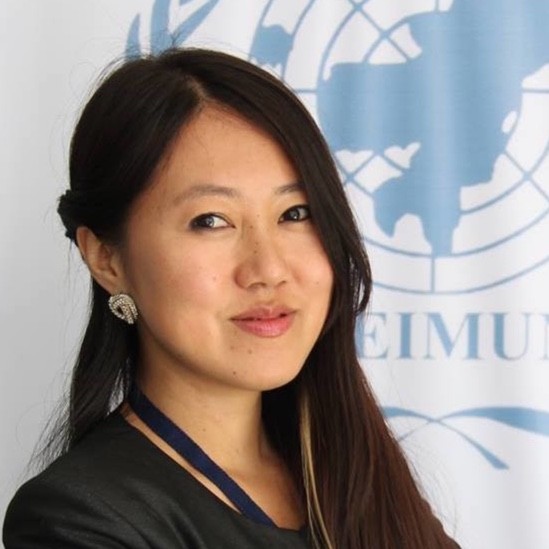
Limabenla Jamir
Local Public Sector Alliance
Limabenla Jamir is a governance and policy researcher with over ten years of experience across international development initiatives. She serves on the Secretariat and Global Team of the Local Public Sector Alliance, coordinating the Asia Working Group and the Inclusive Governance & Local Democracy thematic group. Alongside this, she consults with local government counterparts and development agencies in Northeast India on policy analysis, research, and institutional strengthening. She has previously worked with the World Bank on digital inclusion and citizen engagement. She holds dual Master’s degrees in International Development Policy from Duke University (Rotary Peace Fellow), and in Applied Social Psychology from Royal Holloway, University of London.

Marina Jandrevska
Local Public Sector Alliance
Marina Jandrevska is a Public Financial Management (PFM) and Municipal Finance Expert with over 19 years of professional experience in promoting fiscal discipline, transparency, and accountability in local government systems. She serves on the Secretariat and Global Team of the Local Public Sector Alliance, coordinating the Europe and Central Asia Working Group and the Subnational Finance thematic group. Her expertise encompasses municipal budgeting, financial reporting, internal audit, financial control, public asset management, risk management, and anti-corruption strategies. She is highly experienced in Public Finance Management performance measurement using the PEFA methodology and in strengthening internal control systems through the implementation of segregation of duties in budget expenditure and treasury operations. With more than 15 years of experience in local government, Marina has successfully implemented effective budgeting and financial management systems to enhance transparency and improve fiscal performance. She developed and applied the Municipal Financial Self-Assessment (MFSA) tool under the World Bank’s Austria Urban Partnership Program, presenting it at regional conferences across Southeast Europe, Austria, and Turkey. Marina co-authored the “Handbook for Measuring Performance in Public Financial Management by Local Self-Government Units (LSGUs)” and developed a “Guide for Internal Audit with Good Practices for municipalities”. She has extensive experience in facilitating workshops, mentoring, and capacity-building initiatives for municipal officials to strengthen financial governance and accountability. She has collaborated with major international partners, including the World Bank, USAID, UNDP, and the National Democratic Institute (NDI), on projects aimed at improving public finance systems and enhancing local governance.
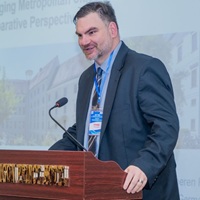
Soeren Keil
University of Passau, Germany
Dr. Sören Keil has been a Senior Teaching and Research Fellow at the Chair of International Politics at the University of Passau since October 2024. Previously, he worked as Academic Head of the International Research and Consultancy Center of the Institute of Federalism at the University of Fribourg in Switzerland, and was associate professor of politics and international relations at Canterbury Christ Church University in the United Kingdom, where he also headed the politics programme. He has more than 15 years of experience as a university lecturer and has taught courses on European politics, conflict resolution, foreign policy analysis, Western Balkan politics, federalism and decentralisation at various universities. Sören Keil is a Fellow of the Bavarian Research Alliance for Peace, Conflict and Security Research and a Senior Fellow at the Centre for Federal Studies at the University of Kent. His research focuses on federalism/decentralisation as a means of conflict resolution, the politics of the Western Balkan states and EU enlargement. He has authored, edited and co-edited thirteen books on these topics, as well as publishing numerous articles in leading journals and book chapters, mainly dealing with Eastern European countries, democratisation processes, decentralisation and federalisation. He is also co-editor of the book series “Federalism and Internal Conflict” published by Palgrave, and the series “Balkan Politics and Society” published by Ibidem. His successes in research funding include a successful application for EU funding under Horizon Europe (3.7 million) and extensive funding from the Swiss National Science Foundation, the Swiss Network for International Studies, the James Madison Trust and the EU’s Erasmus Plus programme. Sören Keil has also worked as an international consultant for several programmes on decentralisation and good governance, and is currently involved in discussions and processes on power-sharing debates in various contexts, including Myanmar, Syria, Nepal, Lebanon, Bosnia and Herzegovina, North Macedonia and Armenia. He has worked as a consultant for the United Nations, the OSCE and the World Bank, among others.
Roy Kelly
Duke University, Durham, NC
Dr. Roy Kelly is a leading authority on property taxation and domestic revenue mobilization, with over 40 years of international experience advancing local government reform and capacity development across Africa, Asia, and Latin America. He is Professor of Practice Emeritus at Duke University’s Sanford School of Public Policy, where he taught from 2001 to 2023. Previously, he served at Harvard University with the Harvard Institute for International Development and the Harvard Kennedy School. Dr. Kelly has advised more than 30 countries worldwide and is the lead author of the World Bank’s Property Tax Diagnostic Manual.
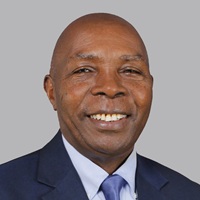
Kithinji Kiragu
Inter-Governmental Relations Technical Committee, Kenya
CPA Kithinji Kiragu has had a distinguished career, culminating in his appointment as the Chairperson of the Inter-Governmental Relations Technical Committee (IGRTC) by former President Uhuru Kenyatta CGH on March 31, 2022. He has a solid educational foundation, with a Bachelor of Commerce degree from the University of Nairobi and an MBA from the University of Strathclyde in Glasgow. Additionally, he is a Certified Public Accountant in Kenya. Over the last thirty years, Mr. Kiragu has been extensively involved as a consultant and adviser to governments and development partners, including the World Bank and UK-DFID. His expertise spans institutional and political economy analysis, organizational and human resources development, public finance management, and governance. Notably, he served as the Chief Technical Adviser for Public Sector Reforms for the Government of Tanzania from 1995 to 1998, and as Strategy Adviser for the reform of Nigeria’s Federal Public Service in 2009-2010. He has also published extensively on topics related to public sector management, political economy, and governance.
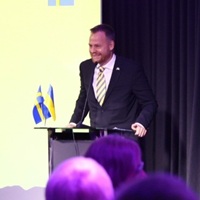
Ryan Knox
SALAR International, Sweden
Managing Director of SALAR International, the international cooperation agency of the Swedish Association of Local Authorities and Regions. Previously worked for UN-Habitat (Head of Syria Office) and the European Union. Over 25 years’ experience of working at the intersection of urban governance, resilience and sustainability in Europe, the Middle East, Africa, and Asia.

Monika Le Roy
Montreal Institute for Global Security (MIGS), Canada
Monika LaRoy is an international governance professional with two decades of experience strengthening democratic institutions and multilevel governance systems across fragile and transitioning states. Most recently, she served as Regional Program Director for the Pacific Islands at the International Republican Institute, where she established the organization’s first regional office in Suva and led engagement across 16 Pacific island nations. She has also worked on human rights and democratic governance initiatives across five continents, including Africa, Asia, Eurasia, the Caucasus, and the Middle East. From 2016 to 2023, she served as Advisor to the Secretary General at the Organization of American States, coordinating hemispheric responses to democratic crises. Previously, she held senior advisory positions with two Canadian Foreign Ministers, leading policy initiatives on democratic governance and multilateral engagement. Her current work examines the collapse of international support for democratic governance, analyzing why development assistance for institutional strengthening is declining and identifying strategies to restore effective multilateral cooperation that advances both democratic principles and national interests.
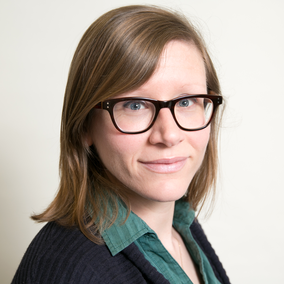
Gundula Löffler
ODI Global
Gundula Löffler is a research fellow at ODI Global, where she specialises in institutional and governance reforms in developing countries in the areas of decentralization, local/urban finance and taxation. She is particularly interested in the political economy dynamics underlying these reforms. Prior to joining ODI Global, Gundula worked as a researcher and consultant on fiscal decentralisation and local taxation in Rwanda and other African countries. She also worked as a development adviser for the Gesellschaft fur Technische Zusammenarbeit (GTZ) in Egypt, Syria and Germany on participatory development, decentralisation, urban management and slum upgrading. Gundula holds a Ph.D. in Public Administration and Development from NYU Wagner. She also has master’s degrees in Public Policy and Management from the University of Konstanz, and in Cities and Regional Studies from Rutgers University.

Diana Lopez Caramazana
United Nations Development Programme
More than 25 years experience working within the United Nations System. Supporting local governments around the world to improve service delivery and improve the lives of their citizens. Areas of expertise include decentralization, municipal management and finance, innovation in public service delivery, transparency and trust in the role of public sector, city diplomacy and the role of local governments in implementing global agendas for international development.
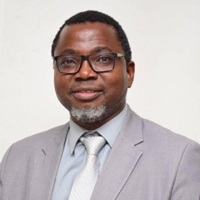
Augustine Magolowondo
Local Public Sector Alliance
I am a governance and elections expert with over 25 years of practical experience working across countries particularly in sub-saharan Africa.

Fernando Marani
Center on International Cooperation, New York University
Fernando Marani is Program Director, Justice, Inclusion, and Equality, at NYU’s Center on International Cooperation. A former career diplomat from Argentina, he has over 20 years of experience in multilateral diplomacy, international law, human rights, and sustainable development. He served four terms as a senior member in the Office of the President of the United Nations General Assembly, including as Deputy Chief de Staff, and held senior roles in global forums related to international law and human rights.

Christine Martell
University of Colorado Denver School of Public Affairs
Christine Martell is a professor at University of Colorado Denver School of Public Affairs, where she focuses on issues of public finance and policy. Her teaching and research interests include debt policy issues, fiscal federalism, tax and expenditure limitations, tax increment financing, international development and the development of municipal credit markets in developing countries. She has worked in the United States, Brazil, Georgia, Taiwan and Jordan. Dr. Martell is the recipient of the Jesse Burkhead Award as well as Excellence in Service and Excellence in Teaching awards.

Kelly McMann
Case Western Reserve University, Cleveland, Ohio
Kelly M. McMann is the Lucy Adams Leffingwell Professor in the Department of Political Science at Case Western Reserve University in the United States. Her research has focused on local democracy, democracy’s tangible benefits, democratization, corruption, and economic reform. She is the project manager for subnational government for Varieties of Democracy. She enjoys sharing her expertise with practitioners and has collaborated with International IDEA, the Organisation for Economic Co-operation and Development, and Brazil’s Instituto Sivis, among other organizations. Her publications include the books Corruption as a Last Resort: Adapting to the Market in Central Asia (Cornell) and Economic Autonomy and Democracy: Hybrid Regimes in Russia and Kyrgyzstan (Cambridge)

Khalid Miah
The Association of Commonwealth Universities, UK
Khalid Miah is Programme Manager for the Commonwealth Sustainable Cities Coalition (CSCC), where he leads the Secretariat and oversees delivery of a UK government-funded initiative bringing together the Association of Commonwealth Universities, the Commonwealth Association of Architects, the Commonwealth Association of Planners, the Commonwealth Engineers’ Council, the Commonwealth Local Government Forum, and The King’s Foundation, to advance sustainable urbanisation across the Commonwealth. He previously led donor-funded initiatives across Africa, Asia, and Europe on Climate Change, Healthy Cities, Social Protection, Youth, and Monitoring and Evaluation. He is also a former Select Committee Clerk of the House of Lords (UK Parliament). Khalid has an MA on the EU and International Relations, a BSc in Politics, and recently completed the Artificial Intelligence Programme at the University of Oxford.
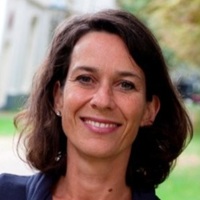
Cecile Meijs
The Hague Academy for Local Governance, the Netherlands
Cecile Meijs is director and founder of The Hague Academy for Local Governance, a foundation that aims to strengthen local governance worldwide by specialising in practice oriented training, both in The Hague and abroad. Before she started The Hague Academy, she worked for the City of The Hague in the field of public communication and participation, and was an expert in several projects of the Dutch Association of Municipalities (VNG International) in Ukraine, Serbia, and Albania. After completing her MSc in communication and public administration, Cecile worked in The Sudan as communication expert in a water project in Darfur and teacher at Khartoum University for Girls. She is also a member of the board of the Netherlands Democracy Coalition.
Katharina Mihaljevic
Deutsche Gesellschaft für Internationale Zusammenarbeit (GIZ)
Senior planning officer on local good governance, decentralisation & public participation.

Zephy Muhirwa
FCDO / British High Commission, Kigali, Rwanda
Zephy Muhirwa is a Governance Adviser at FCDO/British High Commission Kigali Rwanda. My core job responsibilities are playing an advisory role on Public sector reforms including public financial management, tax and decentralization.

Jacqueline Muthura
Local Public Sector Alliance
Jacqueline Muthura is the Co-Chair and Coordinator of the Gender Equity & Women’s Empowerment Thematic Working Group at the Local Public Sector Alliance, where she also serves as Project Manager for the Localizing Women’s Economic Empowerment in Africa initiative and Coordinator of the LPSA Africa Working Group. As a practitioner, Jacqueline works as an Associate Expert with VNG International, supporting counties and municipalities in Kenya, Uganda, and South Sudan to strengthen service delivery, citizen engagement, and women’s empowerment. She is a strategic gender and institutional strengthening expert with close to 15 years of experience in Sub-Saharan Africa, focusing on local governance, rural development, and WASH (Water, Sanitation, and Hygiene). Over the past 12 years with VNG International, she has contributed to designing and implementing gender-responsive local governance reforms and inclusive development programs. She has managed and supported large-scale programs funded by partners such as the Ministry of Foreign Affairs of the Netherlands, the Hewlett Foundation, the Embassy of the Kingdom of the Netherlands, GIZ, UNICEF, and USAID, leading initiatives that strengthen inclusive community engagement and service delivery. Jacqueline holds a Master of Science in Sustainable Development from the University of Sussex and a Bachelor of Science in Water and Environmental Engineering from Egerton University. She is a member of the Women on Boards Network and the International Water Association, and is an alumna of the African School of Decentralisation and The Hague Academy for Local Governance, continuing to contribute to sustainable development, gender equity, and women’s empowerment across Africa.
Michelle Nielsen
UNDP
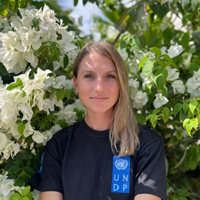
Michelle Nielsen is a Local Action Analyst in UNDP’s Local Action team under the Governance, Rule of Law, and Peacebuilding Hub in New York, where she supports UNDP’s work on local governance, service delivery, and locally led development. She was previously based in Ghana where she coordinated one of UNDP’s sub-regional projects in the Gulf of Guinea and Burkina Faso to advance community-level resilience against violent extremism. Before joining UNDP, she was based in Tunisia, where she worked in the Libya team of the International Centre for Migration Policy Centre. She has previous experience working for the European Union, the Danish Ministry of Foreign Affairs, and the UN Department of Peace Operations. She holds a master’s degree in Peace and Conflict Studies from Uppsala University and a bachelor’s degree in Liberal Arts and Science from Maastricht University.

Kimberly Noronha
University of Pennsylvania, Philadelphia, Penn.
Kimberly Noronha is a Postdoctoral Fellow in City and Regional Planning at the University of Pennsylvania’s Weitzman School of Design, where she researches subnational capacity assessment and climate finance architecture for Task Force 5 of the Global Commission for Urban SDG Finance (co-PIs: Prof. Paul Smoke, New York University, and Prof. Eugenie L. Birch, University of Pennsylvania). The comparative analysis of decentralisation measurement frameworks informs development finance policy on channelling climate finance to subnational governments. Prior to her doctorate, she spent fifteen years in international development, including managing a £14.5 million DFID urban poverty reduction programme in India, advising the World Bank and UNDP, and designing India’s National Urban Livelihoods Mission. She holds a PhD and A.M. in City and Regional Planning from the University of Pennsylvania, an MPhil in African Studies from the University of Delhi, and an MSc in Development Studies from SOAS, University of London.
Judy Oduma
Senior Governance Advisor, Kenya
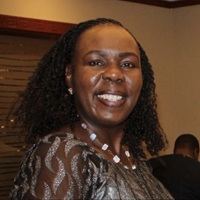
Judy Oduma holds a master’s degree in international studies and is currently taking her doctoral studies in leadership & governance. She is an accomplished professional with huge expertise of over 18 years work in Decentralization, Democracy & Governance, capacity building and Legislative Development, working in Kenya, East and West African regions. Her work has involved working in the international development sector and in government, mainly incorporating public-private sector development to support implementation of decentralisation in Africa, capacity building, localisation & implementation of sustainable development goals, policy analysis, facilitating research to inform policy and legislation, and building partnerships in the intergovernmental relations space to create an environment that supports ease of business and development. Additionally, she has worked with organizations to support electoral processes including education and sensitization on elections preparedness and elections strategies and empowering Women in political Leadership to increase the number of women taking up political leadership positions.
Wilson Pere
Inter-Governmental Relations Technical Committee, Kenya
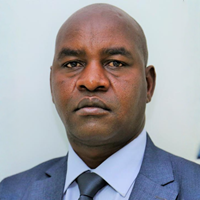
Mr. Wilson Pere is a seasoned public servant with wide experience in the water sector and institutional development spanning over 20 years rising within the ranks of an assistant secretary with Public Service Commission, fund manager, National Constituency Development Fund to Managing Director of Narok Water and Sewerage Co. Limited. He is currently serving as a member of the Intergovernmental Relations Technical Committee where he chairs the sub-committee on Finance, Human Resource and Institutional Development. Mr. Pere has long experience in donor relations having dealt with donor funded projects in the water sector where he is credited with the successful implementation of the Water Services Trust projects, including the augmentation of water supply for Narok Town. He has also served in several boards including Kenya Water Services Providers Association where he was an executive committee member. Wilson holds a Bachelor of Commerce degree from the University of Nairobi where he specialized in management science.

Juliana Pigey
AllNext Consultants, France
Juliana Pigey has 35 years of experience in decentralization policy and fiscal decentralization; intergovernmental transfers and fiscal reform; local revenue sources (taxes and fees) analysis and development; local government financial analysis and creditworthiness; municipal finance and credit markets frameworks; local government capital planning and forecasting; local infrastructure project budgeting and financing. Worked in 45 countries including in Asia, Africa, Europe, Middle East and North Africa. Participated in projects of multilateral and bilateral development partners, including the World Bank, the International Monetary Fund, the European Bank for Reconstruction and Development, the International Finance Corporation, French, German, UK and US development agencies (AFD, GIZ/KfW, DFID/FCDO and USAID respectively). Presented and lectured at numerous training workshops and policy seminars on issues of municipal capital markets and infrastructure finance, municipal financial management, decentralization policy, intergovernmental fiscal relations policies, and intergovernmental cooperation structures.

Daniel Platz
United Nations Department of Economic and Social Affairs
Mr. Daniel Platz currently serves as Chief of the Development Cooperation Forum Unit at FSDO, UN DESA and also coordinates technical assistance and capacity development work on infrastructure asset management for local and national governments. He has made key contributions to UN intergovernmental processes, research and analytics and technical assistance in support of the implementation of the UN Development Agenda, including the Sustainable Development Goals. He has published on issues of development corporation and development finance, municipal finance and infrastructure asset management. Mr. Platz holds a Ph.D. in Economics and an M.A. in Global Political Economy and Finance from The New School University. He received Bachelor’s degrees in Political Science and Economics from Goethe University in Frankfurt, Germany.

Adela Pozder-Cengic
UNDP
Adela Pozder-Cengic is a Local Action Policy Specialist at UNDP’s Governance, Rule of Law and Peacebuilding Hub, with over 20 years of experience in governance and development. Her expertise spans policy and research development, portfolio and project management, capacity building, and the design and delivery of complex programmes, including on governance, decentralisation, service delivery, local development and recovery. She has held progressively senior roles with UNDP, UNV, and non-governmental organisations. In Bosnia and Herzegovina, she managed large governance, rural and regional development portfolios and led the Governance Sector. She also supported UNDP country offices across the Western Balkans, including through the Istanbul Regional Hub. At the global level, she has advanced policy and programme development on core government functions, local action for sustainable development, and UN mission transitions, helping shape organisational strategies and initiatives. Adela has provided policy and programming advice to public institutions and civil society, and built strong partnerships with government, the UN, the EU, bilateral donors, and IFIs. She holds a master’s degree in development cooperation from the University of Pavia, Italy, and a bachelor’s degree from the Faculty of Philosophy at the University of Sarajevo, Bosnia and Herzegovina.

Wilson Prichard
University of Toronto/Local Government Revenue Initiative
Wilson Prichard is Associate Professor of Global Affairs and Public Policy and of Political Science at the University of Toronto, Chair of the Local Government Revenue Initiative (LoGRI) and Research Fellow at the International Centre for Tax and Development (ICTD). He was previously founding Research Director, and then Executive Director, of the ICTD. His work focuses on the political economy of tax reform in lower-income countries, with a particular focus on strategies to support successful sub-national revenue collection in sub-Saharan Africa. He is the author of Taxation, Responsiveness and Accountability in Sub-Saharan Africa (Cambridge University Press, 2015), Taxing Africa (Zed Books, 2018) named a Foreign Affairs best book of 2019, Innovations in Tax Compliance: Building Trust, Navigating Politics and Tailoring Reform (World Bank, 2022) and a variety of academic articles. He regularly engages with governments, donors and civil society about the design of tax reform programs, and how to strengthen links between revenue raising and public benefits, including having led the design and implementation of innovative and successful property tax reform programs in Sierra Leone, and supporting reform planning and design in more than a dozen other countries.
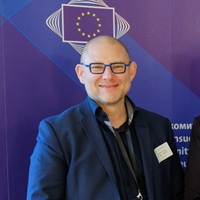
Thomas Prorok
KDZ Centre for Public Administration Research, Austria
Expert in Local and Multilevel Governance, Public Administration Reform in Europe especially EU.
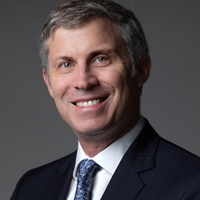
Axel Radics
Inter-American Development Bank
Axel Radics is the Principal Fiscal Management Specialist at the IDB in Washington D.C., specializing in fiscal decentralization and subnational governments. With over 25 years of experience in Latin America and the Caribbean, Axel has held various roles at the IDB, including Acting Fiscal Management Division Chief and Fiscal Management Specialist in Uruguay, Paraguay, Peru, and the Office of Monitoring and Evaluation (OVE). Before joining the IDB, Axel coordinated a fiscal transparency program and an e-government initiative for Argentina’s national government and conducted fiscal research at CIPPEC and CEDI. He holds a B.A. and M.A. in Economics from Universidad de San Andrés, an MPP from Harvard School of Government, and a PhD in Public Policy from the University of Maryland, College Park.

Madhavi Rajadhyaksha
Local Public Sector Alliance
Madhavi Rajadhyaksha is an experienced governance practitioner with 18 years of work experience across low and-middle income countries in South Asia, South East Asia, and Sub-Saharan Africa. She brings a strong commitment to decentralization and locally-led approaches to strengthening public institutions and civil society. She co-chairs the Asia Working Group of the Local Public Sector Alliance and works as an independent consultant based out of India advising leading philanthropies and organizations globally. She has held leadership positions in international development organizations; she was till recently a Senior Director and Head of the Governance Practice at Abt Global Britain and previously, Head of Portfolio, Public Sector Governance at Oxford Policy Management (OPM) where she designed, delivered, and evaluated large and complex governance and civil society programs. She has driven public reform in partnership with the Foreign, Commonwealth, and Development Office (FCDO), The World Bank, the Gates Foundation, The World Food Program and UNICEF among others. Madhavi holds an MSc in Development Studies from the School of Oriental and African Studies, UK and a Postgraduate Diploma in Journalism from the Asian College of Journalism, India.
Jakob Rieken
Federal Ministry for Economic Cooperation and Development (BMZ), Germany
Jakob Rieken is Senior Policy Officer and Deputy Head of the Governance Division at BMZ. He has previously served in different capacities focused on and working in the Middle East, at BMZ, the Friedrich Ebert Foundation as well as GIZ, where he worked as Advisor for Local Governance in Palestine. Jakob holds a Master of Philosophy in Development Studies from the University of Cambridge and a Bachelor of Science in Foreign Service with a focus on International Politics and a Certificate in Arab Studies from Georgetown University.
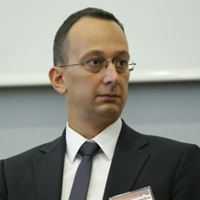
Dario Runtic
Association of Cities in Croatia
Dario Runtic is a senior advisor specializing in public finance, local governance, and policy advocacy. He currently serves as an Advisor at the Association of Cities in Croatia and holds the position of Special Advisor to the Minister at the Ministry of Finance, focusing on local government financing. His distinguished career includes collaboration with key international organizations such as the World Bank, OECD/SIGMA, and the Urban Institute. His technical expertise centers on participatory budgeting, fiscal equalization, income and property taxation, own-source revenue policy, and the design of digital systems for local revenue optimization and PFM. A frequent speaker and author on fiscal policy, Dario is dedicated to modernizing public administration through innovative, data-driven solutions and evidence-based policy.
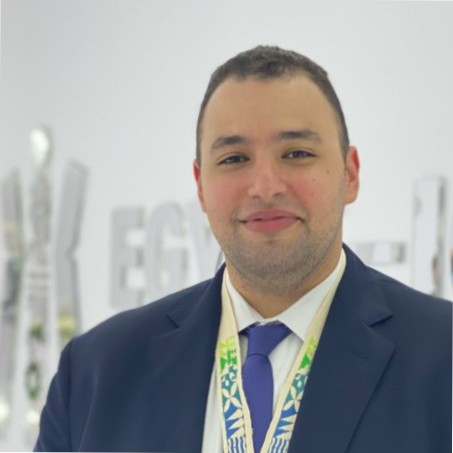
Ahmed Salama
World Bank
Ahmed recently joined the World Bank in 2026, where he works on Multilevel Governance and Decentralization reform. Ahmed is currently on secondment to the World Bank from Egypt’s Ministry of Foreign Affairs and International Cooperation.

Rachana Shrestha
Asian Development Bank
Rachana Shrestha is a senior public sector specialist in ADB responsible for designing and implementing programs in governance, PFM, decentralization, institutional development, and trade primarily in South Asia and Pacific regions. She also provides policy advisory and technical assistance, including knowledge solutions in these areas. Prior to working in ADB, Rachana worked with Netherlands Development Organization, International Labor Organization, and Voluntary Service Overseas. A national of Nepal, Rachana was a Fulbright Scholar and obtained her master’s degree in international development policy from Duke University, USA.

Paddy Siyanga Knudsen
Baobab Advisory / Local Public Sector Alliance
Paddy Siyanga Knudsen is a Zambian national with over 19 years of professional experience as a Development Economist. Her work covers development cooperation, regional integration, budget support, public finance management, trade policy, migration governance as well as diaspora engagement. She holds a Master in Financial Economics from SOAS and BSc Development & Economics from LSE. Her experience includes supporting governments, Regional Economic Communities (RECs), bilateral development partners, civil society as well as UN agencies in program formulation, implementation, research as well as monitoring and evaluation. In Anglo-phone and franco-phone Africa, she has worked on programs supporting and evaluating public sector governance and fiscal decentralization in countries in West, East and Southern Africa.
Nives Kopajtich Škrlec
Association of Cities of the Republic of Croatia
Nives Kopajtich Škrlec has dedicated her entire professional career to local self-government, decentralization, electoral system, and territorial / regional organization. First as a Head of Department in the Ministry of Administration and Justice, and for more than 20 years in the national organization of Croatian cities, where she is the executive director. She is the author of numerous works, participates in international conferences, in numerous working groups for the development of laws related to local self-government, and continuously advocate for greater and stronger powers of cities, the fundamental organizational forms throughout history.

Enid Slack
Institute on Municipal Finance and Governance, University of Toronto
Dr. Enid Slack is the Director of the Institute on Municipal Finance and Governance (IMFG) at the School of Cities at the University of Toronto. Enid has written extensively on property taxes, intergovernmental transfers, municipal fiscal health, metropolitan governance, and municipal infrastructure finance. She consults with governments and international agencies such as the Inter-American Development Bank, World Bank, UN Habitat, the Forum of Federations, and the International Growth Centre. Enid chairs the Advisory Board of Local Public Sector Alliance (LPSA), is a member of the Advisory Board of the International Property Tax Institute (IPTI), and is an Associate of the Local Government Revenue Initiative (LoGRI). In 2012, Enid was awarded the Queen’s Diamond Jubilee Medal for her work on cities.
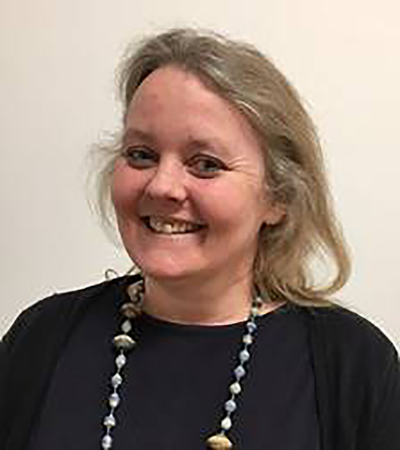
Lucy Slack
Commonwealth Local Government Forum
Lucy is Secretary General of the Commonwealth Local Government Forum (CLGF), working to support and strengthen effective local government across the 56 member states of the Commonwealth.

Heidi Smith
Universidad Iberoamericana, Mexico
Dr. Smith is a research professor in the department of economics at the Universidad iberoamericana. She has over 20 years of experience researching, teaching and consulting in public finance and governance. Specializing in municipal debt and anti-corruption strategies in Latin America, she has held roles at the U.S. Department of State and served as a consultant for organizations like the World Bank, IDB and the OECD. She is based in Mexico City.
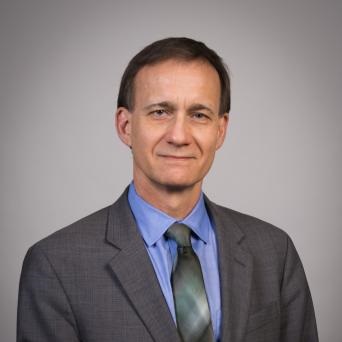
Paul Smoke
New York University
Paul Smoke is Professor of Public Finance and Planning at New York University’s Robert F. Wagner Graduate School of Public Service, Director of the Public and Nonprofit Master of Public Administration Program, and Acting Director of the NYU Center on International Cooperation. His policy and research interests include the political economy of public sector reform, especially fiscal decentralization and intergovernmental fiscal relations, as well as urban and regional development planning. He has published in numerous journals and has authored, edited, or contributed to several books on decentralization and local governance. He has worked in many countries, especially in Africa and Asia, and with a wide range of international development organizations.
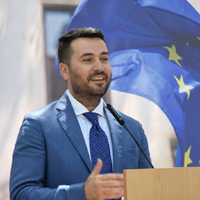
Elton Stafa
Network of Associations of Local Authorities of South-East Europe (NALAS)
Elton Stafa is program director at NALAS in charge of public finance, fiscal decentralization and local development. His work at NALAS focuses on informed policymaking, institutional capacity-building at national and regional level, supporting intergovernmental dialogue, and fostering regional learning and exchange. Elton has an extensive experience in designing and implementing fiscal decentralization legislation, policies and reforms. He leads the NALAS Task Force on Fiscal Decentralization, is the editor of the annual NALAS Fiscal Decentralization Report for South-East Europe and coordinates the NALAS Regional Decentralization Observatory, a platform serving as knowledge and information hub for local government finance in South-East Europe. He has previously worked at the Ministry of Finance of Albania and as a fiscal decentralization expert for the EU, WB, IMF, ADA, SIDA, GIZ, SDC etc. Elton holds MSc. in European Economy and Business Law from the University of Rome Tor Vergata, has taught at the School of Economics of the University of Tirana and has authored a number of studies on fiscal decentralization and intergovernmental dialogue.

Tengiz Sultanishvili
Movement for Social-Democracy, Georgia
The world gets better when we treat people like they’re the whole point. It’s the core of how I approach my work in governance, business, and bringing people together. I work to make sure our institutions speak human, championing the rule of law so the “rules of the game” are fair for everyone, regardless of their status or influence.

Esteban Szmulewicz
Universidad Católica del Norte (UCN), Chile
Lawyer. Master in Political Science and Comparative Politics (LSE). PhD in Law (Leiden University). Full professor of public law (Universidad Católica del Norte, Chile). Director of the research network on Governance, Society and Territory (GST) at Universidad Católica del Norte, Chile. Member of the Board of the Centro de Estudios del Desarrollo (CED, Chile). Member of the multilevel governance network (UNED, Spain). Fellow of the Salzburg Global Program.

Jamie Thomas
Forum of Federations
Jamie Thomas is a Program Manager with the Forum of Federations and an Affiliated Researcher at the Centre on Governance at the University of Ottawa. She is responsible for leading the Forum’s thematic research programs on state fragility and digitalization. In this role Jamie works with international actors, government stakeholders, academics, and members of civil society from around the world to conduct and mobilize practically focused research on federalism and contemporary governance challenges. Jamie’s own research focuses on the intersections between transitional justice and sustainable governance settlements. She is a co-editor of the forthcoming volume The Forum of Federations Handbook on Digitalization in Public Administration of Federal Countries (Palgrave Macmillan, 2025) and co-author of the forthcoming article Federalism, Peacebuilding and Transitional Justice: The Implications of Interaction? (L’Europe en formation, 2025). Jamie holds a Master of Arts in Political Studies from Queen’s University, where she additionally completed coursework as visiting graduate student in the War Studies Program at the Royal Military College of Canada. Jamie also holds a Bachelor of Arts (Honours), First Class in Political Science with a minor concentration in Security Studies from the University of Calgary.

Nicholas Travis
LPSA / Consultant
Nick Travis is an independent researcher and consultant in the field of public finance. He works as a consultant for a wide range of international and local development institutions in support of efforts to improve service delivery through governance reform. He is currently supporting the LPSA Secretariat to roll out the Local Governance Institutions Comparative Assessment (LOGICA) framework and other core research activities.
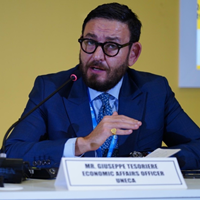
Giuseppe Tesoriere
United Nations Economic Commission for Africa
Giuseppe Tesoriere is a PhD economist and Economic Affairs Officer at the UN Economic Commission for Africa. With over 15 years of experience across 20 countries and more than 50 cities worldwide, he has worked extensively on economic development, economic geography, resilience, inequality and sustainable development. Before joining UNECA, he served as Senior Economist at the World Resources Institute and UN-Habitat. He has led major research initiatives and fieldwork in Africa, the Middle East, Asia and Latin America, including joint studies with the Asian Development Bank, Inter-American Development Bank and GIZ. His contributions include key UN flagship publications such as the UN Secretary-General’s reports on Culture and Sustainable Development, the Economic Report on Africa, and World Economic Situation and Prospects. The author of over 50 publications in peer-reviewed journals and UN technical reports, his work has been translated into French, Spanish, Vietnamese, and Italian. A frequent keynote speaker and guest lecturer at Global and Regional Forum, he also reviews for leading journals including PLOS ONE, Sustainable Development, International Social Science Journal, and the Journal of Economic Studies.

Mwangi Thuita
Carnegie Corporation of New York
Mwangi Thuita is a program analyst for the International Program. He provides cross-portfolio support for the development and execution of the program’s strategy to advance peace in an evolving world. Before joining Carnegie, Thuita was a technical advisor at the Permanent Mission of Kenya to the United Nations. Previously, he worked at the Social Science Research Council, where he supported the implementation of programs advancing African scholarship in the social sciences.
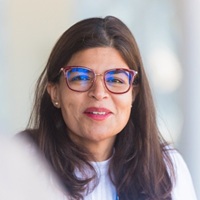
Mariam Umarji
Ford Foundation
Ford Foundation Policy Advisor, G20.
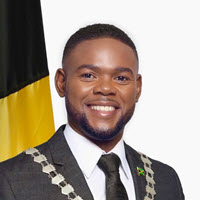
Richard Vernon
Mayor of Montego Bay and Chairman of the St James Municipal Corporation, Jamaica
Richard Vernon serves as Mayor of Montego Bay, Jamaica, and Chairman of the St James Municipal Corporation. A dedicated member of the Jamaica Labour Party (JLP), he began his political career in 2016 when he was elected councillor for the Montego Bay South Division. His leadership qualities and commitment to public service led to his appointment as Deputy Mayor and Vice-Chairman of the Corporation in 2020. On March 7, 2024, Vernon was unanimously elected Mayor, making history as the youngest individual to hold the office at 34 years of age. His administration is guided by a vision of sustainable development and inclusive prosperity, with a strong emphasis on improving infrastructure, enhancing economic opportunities, and advancing citizen welfare. Mayor Vernon has outlined plans to implement a comprehensive local sustainable development framework beginning in the 2024/25 fiscal year, positioning Montego Bay for long-term growth and modernization.

Betty Wainaina
Center on International Cooperation, New York University
Betty Wainaina is the Program Director of the Multilateral Reform Program at the New York University’s Center on International Cooperation. The program advances applied policy research aimed at promoting and defending multilateralism, advancing reform proposals targeting multilateral institutions, and identifying synergies between the United Nations, International Financial Institutions and other Multilateral Development Banks. Through the program, CIC provides expert analysis and policy briefs aimed at informing cross-regional member states and experts discourse, institutional policy engagement and contributing to the broader community of practice. Thematically, this work covers multilateral policy approaches and global norms relevant to fragility, conflict and violence, including financing solutions for sustainable development. Betty is an international development specialist, combining research and practitioner experience that includes various roles held at the World Bank, the Government of Kenya and other international organizations. Her work has mainly focused on issues of global economic governance with a particular focus on financing for development and aid effectiveness

Deborah Wetzel
Independent Consultant (Former World Bank)
Deborah Wetzel is a U.S. national with more than 35 years of experience in development work around the world. She currently works as an independent consultant, and serves as a Board Member for the Partnership for Transparency and as a member of the advisory Board to the Local Public Sector Alliance. Dr. Wetzel served in a wide range of positions at the World Bank including Director of Regional Integration in the Africa and MENA Regions; Senior Director of the Governance Global Practice; Director of Strategy and Operations for the Middle East and North Africa Region; Country Director for Brazil; and Chief of Staff to World Bank President Robert Zoellick from 2010-2012. Her professional expertise focuses on Governance and Public Sector Management issues including anti-corruption, decentralization, fiscal federalism, openness & transparency, public finance, and public sector reform. Dr. Wetzel has a D.Phil in Economics from the University of Oxford and a Masters in International Studies from Johns Hopkins University, School of Advanced International Studies. Her BA is from Smith College. She is the author of publications on fiscal decentralization, public finance, governance, and sub-national affairs. She is a member of the Council on Foreign Relations.

Tim Williamson
World Bank
Tim Williamson is the World Bank’s Global Lead for public financial management for the World Bank, based in Washington DC. He leads the Reimagining Public Finance initiative and was one of the team leaders of the Future of Government initiative. Through his work, Tim aims to strengthen the role of financing and institutional reforms in enabling the achievement of development results. Tim joined the World Bank in 2016 and was initially based in Nairobi, from where he led governance engagements in Kenya and Uganda. In Kenya, Tim helped develop a results-based approach to engagements in public financial management reform. In Uganda, Tim led a multi-disciplinary team supporting reforms to the financing and management of local government service delivery in health, education water and irrigation. In both Kenya and Uganda he has applied problem based approaches to reform, building teams and coalitions of actors to deliver change within both clients and focusing on the achievement of reform results. Prior to joining the bank Tim carried out advisory work and applied research predominantly in East Africa and South Asia. Tim had a long relationship with the Overseas Development Institute (ODI) working as a Research Associate and started his career in 1998 working at the Ugandan Ministry of Finance.

Hanspeter Wyss
Swiss Agency for Development and Cooperation (SDC)
Hanspeter Wyss is a Policy Advisor on Democratization, Media, and Elections at the Swiss Agency for Development and Cooperation (SDC), part of Switzerland’s Federal Department of Foreign Affairs, where he focuses on strengthening democratic processes and institutions, independent and reliable media, and supporting decentralization in partner countries. Before his current role, Hanspeter worked at the World Bank’s Migration and Remittances Unit (2013-2017), contributing to KNOMAD, and led SDC’s labor migration programs in the Middle East and North Africa (2017-2021), promoting fair migration governance and migrant protection. Earlier, he held various positions at SDC, including Focal Point for Multilateral Organizations and Management for Development Results, Program Manager for sustainable development negotiations, Deputy Head of the Swiss Cooperation Office in Benin, and Program Manager for institutional dialogue with the World Bank and IMF. Hanspeter holds a Master’s degree in Development Economics from the University of Zurich/Switzerland.

Janine Xavier-Cross
Commonwealth Local Government Forum
Janine Xavier-Cross is the Networks Manager at the Commonwealth Local Government Forum (CLGF), based in the CLGF Caribbean Office in Trinidad and Tobago. She leads delivery and coordination for CLGF’s Commonwealth Sustainable Cities Network and the Commonwealth Women in Local Government Network, and supports the Commonwealth Youth for Sustainable Urbanisation. Janine holds a BSc in Biological Sciences from King’s College London and an MSc in Spatial Planning from University College London. Her career spans the UK and Trinidad and Tobago across public, private and development contexts, with experience in urban and regional planning, research and policy development, and the design and management of complex, multi-stakeholder programmes. Her work consistently focuses on strengthening local governance, advancing inclusion, and accelerating sustainable development through decentralisation, poverty reduction, local economic development, and the localisation of the Sustainable Development Goals.
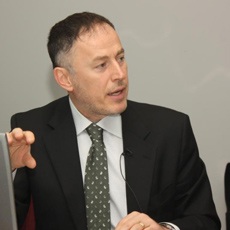
Serdar Yilmaz
World Bank
Serdar Yilmaz is a Manager at the World Bank. He has broad experience in the related areas of fiscal decentralization, public expenditure management, subnational governance, and governmental accountability. Throughout his twenty-year five tenure at the World Bank, he has provided technical assistance and contributed to policy reforms in low and middle-income countries in Africa, Eastern Europe and Central Asia, the Middle East and East Asia regions. In addition to his task management responsibilities, Serdar makes original contributions to the academic and policy literatures. Serdar holds a Ph.D. in Public Policy from George Mason University.
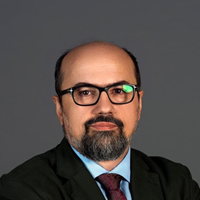
Kelmend Zajazi
Network of Associations of Local Authorities of South-East Europe (NALAS)
Kelmend Zajazi is the Executive Director of NALAS, the Network of Associations of Local Authorities of South East Europe since 2007. Mr Zajazi is a member of the Council of Europe’s Independent Expert Group on European Charter of Local Self Governments. Previously, Mr. Zajazi managed USAID Local Government Reforms and Democracy Network Programs, served as an Advisor of the Minister of Health and worked with the European Commission Humanitarian Aid Office in North Macedonia. Zajazi is a Medical Doctor and holds a Masters degree in Public Policy and Management from the University of Pittsburgh
Please note that participant registration is updated on a regular basis. Participation will be in-person unless otherwise indicated with the hybrid participation symbol ( ).

