

Fiscal Decentralisation and Local Finance Course
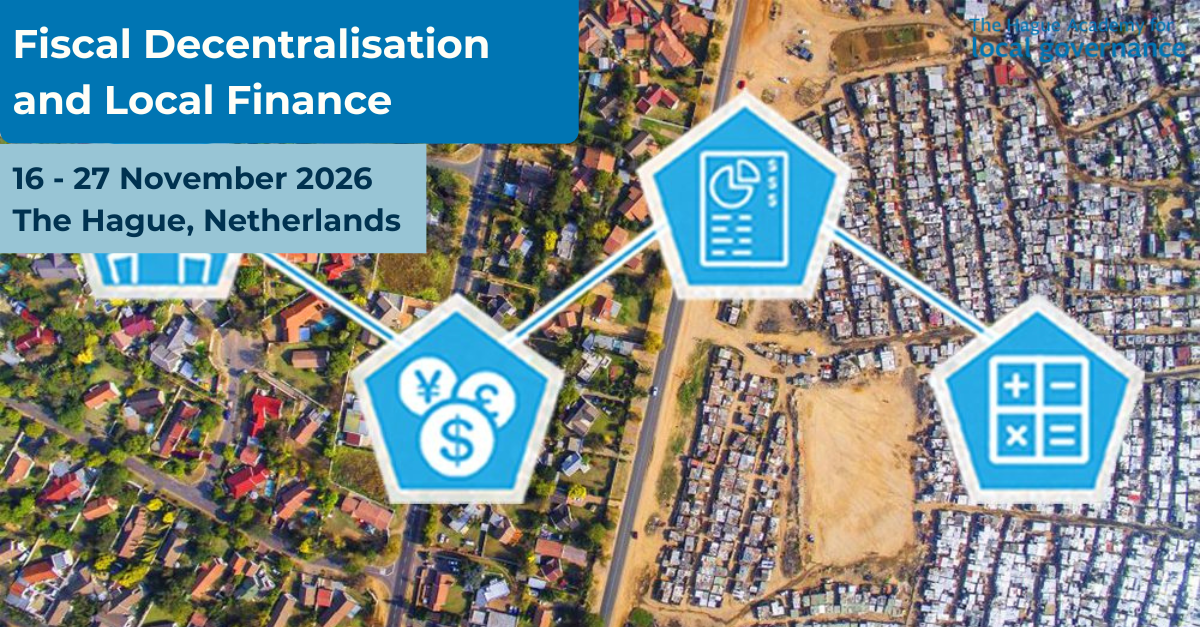
How can fiscal decentralisation contribute to locally led development and increase government accountability? What financial arrangements help national and local governments to cooperate more effectively to deliver services such as health care, education, housing or social services? How can local authorities increase their local revenue? And how can they engage citizens in the budgeting process?
- Explain the four pillars of fiscal decentralisation: assigning expenditure responsibilities and the subsidiarity principle; assigning revenue sources for local authorities; intergovernmental fiscal transfers or grants; and sub-national borrowing.
- Assess decentralisation and its potential in their own country with the help of the MOOD-framework (Multilevel governance as an Obstacle or Opportunity for Development)
- Identify sources to increase local revenue, such as taxes, user fees, intergovernmental fiscal transfers and public-private partnerships
- Understand different mechanisms for transparency and accountability in local government budgeting and spending
- Design and lead inclusive, participatory, and gender-responsive budgeting processes
Interested? Find more information about the content, application process and group discounts on our website.
We offer a 50% reduction of the course fee for practitioners from local authorities and local NGOs from countries on the OECD DAC-list.
Should you know other persons in your organisation or network who may be interested in this course, please feel free to forward this email.
For general inquiries, please contact info@thehagueacademy.com or call +(31) 70 37 38 695

